Don’t Follow the Money

“I’m sorry. I only have a debit card.” The elderly woman is purchasing a guitar string, the price–one dollar and ten cents. Plus tax. She has no cash, but her trusty plastic card is readily accessible and is in her wrinkled hand in a flash. It is only one of a multitude of such cashless transactions which will be handled through my cash register today. I smile at the lady and tell her not to worry. “We like plastic!” It is, in fact, the mode of payment for the great majority of our sales these days.
I mention this mundane event, truly an everyday occurrence for us, only because of the deeper thoughts that I can’t stop from racing through my head. I chuckle every time someone apologizes for not handing me what they think is real cash, as I consider the progression of this thing we call currency. I laugh because I have recently heard many people bemoaning the lack of the stamped coins and folding printed bills with which to pay their tabs in my store. They’d rather pay with cash, but they only carry the plastic cards now, and they miss the way their wealth used to feel in their pockets and hands. And, as I hear them complain, I am taken back a few years to the time when the printed money was changed in appearance. “It looks like someone spilled coffee on it!” I heard, as one man held up the then-new ten dollar bill. “They’re just like Monopoly money,” was heard again and again, as the new bills appeared in wallets and cash registers. Back then, I found myself recalling a time a few years before, when President Nixon had effectively taken us off of the so-called Gold Standard. It was almost like heresy to many, who wanted to believe that their cash had something tangible to back it up. Before that, under President Johnson, silver coins were devalued when new silver-clad ones were issued, much cheaper copper making up the bulk of the coin hidden inside. We sarcastically called them sandwich coins, intimating that they were worthless, although in appearance, they were quite similar.
Do you see a pattern here? If all you have done as I’ve written about the changes in our currency in recent years is to agree that we have greatly devalued our money by these changes, you are missing the point. Back up just a bit more and take in the entire scene. Go back a few more years. See the gold being confiscated by President Roosevelt. Think about the hundreds of thousands of dollars in paper money issued during the Civil War, without any backing whatsoever. Almost a century before that, when the Continental Congress issued the first money for our new nation, it was called Continental currency. Within months, it was worthless, backed by no assets whatsoever. Many refused to take the Continentals in exchange for their goods or labor, giving rise to the phrase, “Not worth a Continental.”
Have you backed up far enough to see it? Sometimes we are so spellbound by the magician’s hands that we don’t see what the rest of his body is doing. Yep. It’s all just an illusion. I’m talking about currency again. We focus so much on what we have worked all of our lives to earn and save, that we don’t realize that the dollars, or pesos, or yen, are nothing more than simple tools which have been elevated in our collective minds to be the finished product. We believe the cash itself is the goal, when in actuality, its only purpose is to help form a common evaluation which can be used to acquire goods and services.
The value is not the dollars. It is what those dollars will accomplish. Yet whole civilizations have risen and fallen based on worthless currencies. Kingdoms have been built out of trashy pieces of paper and shiny pieces of metal. Countless generations have sold their souls for those same baubles and knick-knacks. Even our generation is right now sacrificing our children and our grandchildren on the altar of cash–that cash, without argument, just as much an idol as any wooden or stone image ever formed with human hands.
I have a proposition to make. Maybe we could agree to recognize money for what it is—simply a tool to perform a function. Perhaps, in this election year, we could even agree not to be offensive to each other as we discuss how this tool is wielded by our representative government. Perhaps we could talk rationally and cooperate with those around us, as we help to open as many eyes as we can to the folly of trusting in the paper and coins cranked out daily by our printing presses and mints. We say that we trust in God. Let’s prove it by not arguing about money. There are more important things about which to go to battle. When we fight over the false gods of the world, we guarantee that the world will ignore any other warnings we may voice about the real dangers all of us face.
Cash, or credit. It matters not. I’m finally beginning to see through the illusion.I think I’ll be putting my trust in something just a little more dependable.
“For the love of money is a root of all kinds of evil…Command those who are rich in this world not to be arrogant, nor to put their hope in wealth, which is so uncertain; but to put their trust in God, who richly provides us with everything for our enjoyment.”
(I Timothy 6:10a,17~NIV) 
“Money is the worst currency that ever grew among mankind.  This sacks cities, this drives men from their homes, this teaches and corrupts the worthiest minds to turn base deeds.”
(Sophocles~Ancient Greek playwright~Fifth century BC)

© Paul Phillips. He’s Taken Leave. 2012. All Rights Reserved.

The Sweet Life

“If you can count to ten, you can play this instrument.” I heard the words many times, as my father-in-law attempted to sell the wooden four-stringed box. They were indeed, true. The mountain dulcimer, with its single melody string and a trio of relatively-tuned drone strings beside it, was an extremely easy instrument to master. Well, perhaps not to master. There are many talented instrumentalists who take years to become virtuosi of the dulcimer.
How odd, you might say. I thought your father-in-law said that it was as easy as counting to ten. Ah! You see, there is a slight difference of opinion regarding this ancient folk instrument. In its original form, the frets, which determine the intonation (tuning) when the string is depressed to the fingerboard, only extended below the one melody string. Since that time, the design has changed in this one respect; the frets extend across the entire fingerboard under all the strings. While the old-time dulcimer players insist that only the one melody string is to be fretted and the others left open to be strummed as drone accompaniments, many players see the frets under all the strings and assume that they all must be depressed, as with a guitar or banjo. When the original method is employed, it is just as easy as counting to ten. It takes a bit more practice and knowledge of the instrument to use the other method.
I will do nothing to settle the argument tonight. I will, however, tell you of a customer who carried one of these beautiful folk instruments into my store the other day. She is a musician herself, a trained pianist and a vocalist. When she and her husband purchased the pricey instrument a couple of years ago, she had the best intentions. She bought books, and videos, and accessories, fully expecting that she would be able to play this fine walnut instrument. On this more recent day, she was declaring failure. She will never play the dulcimer. I mentioned the sentiments I had heard vocalized by my late father-in-law over the years. She scoffed at the idea, even as I, completely untrained, began to strum the first strains of “Amazing Grace”, fretting the melody and strumming the drone strings. “Well, sure! I could do that! That’s not playing.” She went on to talk about the various tunings and the random chord patterns, as she bemoaned her inability to play the beautiful thing.
The very name of this simple instrument tells a story in itself. From the Latin “dulce” (sweet) and “melos” (song), meaning “sweet music”, the dulcimer can be a remarkably versatile accompaniment to other instruments and to voices. Even in its simplest usage, the music it produces is haunting and lies sweetly on the ears. I would expect nothing but sweetness from this fine example of the luthier’s art. Alas, its former owner would dispute the wisdom of that expectation. She is left with a bitter taste in her mouth from the wasted hours of practice and the frustration of her perceived failure.
I will spend but a moment on my thoughts regarding the truth to be learned here. I wonder often if we don’t make life much too difficult. Before us, we all have days with the same number of hours. There are tasks set before each of us which must be accomplished. In my experience, we are almost always equal to the task, but we often handicap ourselves with a poor attitude, and by procrastination. I have also noted that we frequently make the job before us harder than it needs to be, decrying those who would give valuable help and despising wise advice. Sometimes, the simplest answer to our problems is the last solution we will consider. I don’t claim to have learned the lesson myself, simply to have observed the situation again and again. I am, after all, a slow learner, requiring repetition to grasp the simple concepts many others adopt the first time they are presented with them.
I sat with the dulcimer for a moment tonight and strummed out the haunting melody of the ancient plainsong carol “Of The Father’s Love Begotten”. It wasn’t a masterful performance, neither was it fit for consumption by any other ears but my own. That said, I have a differing feeling toward this dulcimer than its former owner does. To my mind, it is indeed a source of sweet music and a joy to play.
And, I only needed to count to ten to be able to play it.
“All the great things are simple, and many can be expressed in a single word: freedom; justice; honor; duty; mercy; hope.”
(Winston Churchill~English orator and Prime Minister~1874-1965)
“It is the sweet, simple things of life which are the real ones, after all.”
(Laura Ingalls Wilder~American author~1867-1957)
© Paul Phillips. He’s Taken Leave. 2012. All Rights Reserved. 

Ugly People

Wally World!  The one day off I get in three months and I end up at Wally World.  I detest the place.  You know the place I mean.  That mega-store that tells you the lie that the way you’ll live better is if you save money.  What they really mean is that they’ll live better if you’ll spend more money there…but wait…If I go off on that tangent this early in the discussion, I’ll never talk about anything important.  Come to think of it, what I write may not be so important anyway, but I’m at least going to give it a shot.

The Lovely Lady and I had attempted to visit a new antique store, but today being a holiday, were met with locked doors and darkened windows.  Since we were already close and knew we needed dog food for the little monsters in the back yard, the evil-empire seemed a reasonable secondary destination.  It wasn’t.  It seems that thinking about how much money we need to save to live better makes all of us more than a little self-centered.  I lost count of the times people pushed their way from the end of a side aisle into the main one, without ever looking and never even muttering an “excuse me” or “sorry” as I had to stop for them or be run over.  Hands reached in front of my face as I waited for the Lovely Lady to find a grocery item and other carts bumped mine in the narrow aisles, but there was no sign of concern, not even a head nod to indicate a mea culpa from any of the guilty parties.  We all ignored everyone else as, for the duration, our focus narrowed in on our own needs and desires.

Mere moments into our little excursion, I was in much the same condition as most of them, angry and self-absorbed, intent on getting what I came for and getting out.  Then I saw her.  THE Wally World Shopper.  The young lady (she was indeed an adult) was dressed in the consummate costume for shopping in this zoo.  Below her mussed-up mop of brown hair, her obese body was stuffed into a too small spaghetti-strap tank-top covered with vertical stripes and a pair of colorfully clashing shorts (also too small).  From her shoulder hung a huge handbag adorned with brightly colored polka-dots.  Positioned as it was, beside the striped top, the picture was already ridiculous. The brown leather cowboy boots which came up to just below her calves were the last straw.  I was momentarily powerless to stop what happened next.

I took a picture of her with my cell-phone.  She didn’t know it, since I had the phone in my hand already.  It was a good photo, showing the “ugly” shopper in all of her splendor.  As I wandered on down the aisle, I clicked over to my Facebook page and tapped the “photo” button.  The picture was moved to the appropriate screen, ready to be uploaded for all the world to see.  I even typed the words below it, “Can you tell where I am?”  Laughing at my own wit, I reached my index finger over to click on “upload”, but something stopped me. I just couldn’t tap the screen.

I left the post on my phone without uploading it and caught up with the Lovely Lady as we checked out.  Happy to leave the madhouse, we escaped into the triple-digit heat and headed home.  As we drove, I showed her the photo and mentioned that I was going to post it.  She said just one sentence, “She’s somebody’s daughter or niece, you know.”  Nothing more. It was enough.

When I got home, I sat and looked at the picture and at my words.  My thumb touched the “cancel” button.  The question flashed on my screen, “Are you sure you want to cancel this post?”  Almost angrily, I mashed the screen where the “yes” button appeared, again and again.

I remember now why I hate television programs such as “What Not To Wear”, where fashion snobs shame people into becoming what those snobs think is acceptable.  I hate them because they reinforce the idea that we are better than people who are different than we are.  I hate them because they legitimize the laughter at someone else’s expense, simply because we believe that we are smarter, or better looking, or stronger.  I say I hate the programs like this, and yet I do the same thing.  Regardless of whether I made the right decision today, I think that way in my heart, in the depths of my soul. Why else would I have taken the picture, or written the words?

Now who’s ugly?  In my mind, I see the Teacher, sitting and drawing in the dirt with a stick, as the intelligent ones, the arrogant ones, slink away one by one, confronted with their own sin, their own ugliness.  “Let him who is without fault begin the punishment.”  I am one of those accusers, now faced with who I really am.  What will I do about it?

I don’t have the answer.  I know that the journey to any destination starts with just one step in the right direction.  Tonight, I take that step.  Tomorrow…I’ll try to keep going. It won’t be a short journey.

I’d like to have some company as I make the trek.  Do you see any reason you might be going my way?  Two are always better than one alone.

I trust you won’t mind being seen with an ugly person. Hopefully, it will only be a temporary condition.

“When evil men shout ugly words of hatred, good men must commit themselves to the glories of love.”
(Martin Luther King Jr.~American minister and civil rights leader~1929-1968)

“You, therefore, have no excuse, you who pass judgment on someone else, for at whatever point you judge the other, you are condemning yourself, because you who pass judgment do the same things.”
(Romans 2:1~NIV)

“My psychiatrist told me I was crazy and I said, ‘I want a second opinion.’  He said, ‘Okay, you’re ugly, too.”
(Rodney Dangerfield~American comic~1921-2004)

© Paul Phillips. He’s Taken Leave. 2012. All Rights Reserved.

Another Nightmare On Elm Street

As we drove up Elm Street, I saw them. Two teenage girls standing in the driveway, deep in conversation. Or, so I thought. The closer we drew, the odder the picture became. The one girl could only be described as animated. Her body language told us that she was engaged with the other person. She waved her hand, first in a dismissive way, then in a question. Her head moved as she spoke. The problem was that the other girl quite obviously wasn’t engaged. She stood slouching, hands stuck in the pockets of her jeans. As our car drew abreast, while the first girl was unaware, this young lady stared at us with a frown on her face. She didn’t look at her friend at all as the conversation continued.
Photo: Ed Yourdon
How rude, I thought! Then I saw it. The ubiquitous cell phone, held to the ear of her energized friend, as she talked to an unseen person and ignored the one standing right in front of her. This was not a conversation between two friends physically present with each other, but one between two friends who were distant in locale, yet engaged in spirit, while at least the one other person we could see was left out. Alone, if you will. While her companion enjoyed fellowship with the person at the other end of the call, this young lady who had thought she was with a friend, was in reality completely alone. I have a suspicion that this is happening with greater and greater frequency in relationships today, the suspicion fueled by the number of times I see the exact scenario played out in stores, and restaurants, and parks today.
Have you ever been alone? Really alone? I don’t mean alone in a time and space in which you choose to be by yourself. I’ve done that many times. A walk taken in the late evening to clear the mind doesn’t count; the early morning “hunting trips” in the fall, with rifle held in my hands, but no intention whatsoever of shooting any prey, isn’t on my radar screen tonight. I’m talking about that sense of being alone even when you are with other people. Sometimes with a great number of people.
I have been in a building with thousands, but felt more lonely than at any other time in my life.  I have stood with three or four men as they actively debated a matter but, having no interest in the subject under discussion, have been utterly alone with my own thoughts and a wish or two to be somewhere else. That said, I have been blessed to spend my life surrounded by people who have been engaged and engaging. My life is filled with friends and family who care and who show it.
Not everyone is so blessed. The woman who stood before me yesterday, weeping as she inquired if I could help her out, was surrounded by customers in the music store, but her words belied any sense of fellowship with any of us. “I don’t know how much one person can be expected to stand…” The young man, who transferred from a college in another town, said to me just today, “I’m asking myself, ‘What am I doing here?'” He doesn’t think he fits in. On an unfamiliar college campus with fifteen hundred other students, he is alone. I’m pretty sure that we could multiply these two by hundreds and thousands across our nation. All surrounded by people…All alone and lonely. All waiting to be engaged.
I don’t have easy answers. I’m not sure there are any pat replies to, “I’m alone.” The reality is that none of us needs to be alone, and yet, many are. You know some of them. Some, you have seen as you make your daily trip to work, or to the grocery store, or to school. Perhaps the best answer is for us to engage. It will take us out of the sheltered havens that we have built for ourselves and it will leave us uncomfortable. But, they’re not knocking down our doors, so we have to do some knocking down of our own, breaking through their defenses and sharing ourselves.
When our Creator said, “It is not good for man to be alone”, He wasn’t just talking about romance and marriage. He meant, quite simply, that it is not good for man to be alone!We are made in such a way that we need fellowship, made to mesh with others of like mind and similar interests. When we fall down in our responsibility to bear each others’ burdens, to engage if you will, we live in selfishness and pride and perpetuate loneliness for others.
Once more, I must descend from the soap box. I didn’t intend to stay up there for more than a moment, but time flies when you’re blathering on. I have made some decisions, as I rambled on, though. I resolve to listen more, to care more, and last of all (perhaps most important), to use my cell phone less in the presence of others. On second thought, it isn’t the most important, but it’s a start.
I’ve heard they have this new thing called voice mail. It could prove to be an amazing tool, and quite probably should be utilized more often. I’ll try it out…
“We who are strong are indebted to bear the infirmities of the weak and not to please ourselves.”
(Romans 15:1,2~Aramaic Bible in Plain English)

“I cried out with no reply 
And I can’t feel You by my side,
So I hold tight to what I know…
You’re here…and I’m never alone.”
(Never Alone~Barlow Girl~American Contemporary Christian music singers/songwriters)

“When you get the chance to sit it out, or dance…
I hope you dance.”
(“I Hope You Dance”~ Mark Sanders and Tia Sillers~American Country Music songwriters)
© Paul Phillips. He’s Taken Leave. 2012. All Rights Reserved.

Summer is Passing

“Don’t you have any seasons down here?” The elderly man was standing outside the Luby’s cafeteria in the South Texas sun, in his hand a handkerchief, with which he mopped his brow. It was January–by strict definition, the middle of winter, yet the eighty-five degree temperature belied the title. The long line at the cafeteria was populated generally by older folks, like this gentleman, from parts much further north. They suffered in the heat, while the natives who stood impatiently in the line with the Snow-Birds, as we commonly called these northerners, noticed nothing out of the ordinary.

I heard a man nearby reply laconically to the old Winter Texan’s (what the Chamber of Commerce wanted us to call them) query. “Yep. Two. Hot and Hotter.” He wasn’t lying. The temperate climate of the Rio Grande Valley, where I spent my childhood (I almost inserted “wasted”, but in fact, it wasn’t), was such that the trees and foliage were covered in leaves and blooms year round. The folks from the colder climes came year after year to spend their winters in a place where the snow didn’t blanket the ground, nor ice cover the streets. We commonly joked about the rubber-necking habits of the old folks, as they drove the highways and roads, exclaiming in disbelief about the plethora of fruit-bearing trees and the flourishing tropical greenery. It was the middle of the winter! How was it possible that everything was still growing? They thought it was a paradise, of sorts. I haven’t always agreed.

I left my childhood home at the end of my teen years, looking for a place to start out on my own. One of the prerequisites I had for the place in which I would settle was the presence of four distinct seasons. I wanted to experience winter. (Ah, the foolishness of youth!) I also wanted to see the blossoming forth of the spring. The summer season, I understood all too well, but I knew I could endure it. I even looked forward to the autumn, as the trees began to go into hibernation, pausing for a few weeks before that to bring out their finest adornments for one last fling. What an explosion of beauty, short lived though it might be!

The foothills of the Ozarks proved to be the perfect locale for experiencing all of the seasons, most of them fairly mild…the winters with just the right amount of cold and snow, the springtime not too stormy, but beautiful with new life, nor the summers unbearably hot. And, the autumn? Ah! The autumn did not disappoint, with brilliant colors and spectacular vistas. I, like the aforementioned Snow-Birds, thought it paradise.

It’s funny how the years can change your perspective. For the last decade, I have begun to dread certain seasons. At first, I thought nothing of it. Spring, I still love without reserve. New life–the earth is unfettered and fertile. How can one not love spring? And summer, with the kudzu covered hillsides, and its long lazy days easing into beautiful star-lit nights? Aside from those few with extreme temperatures and lack of rain, as this last one proved to be, I love summer and am always sorry to see it wane. And now, as the years continue on, I have begun to question the reason for my change of heart, because I am loath to see the beginning of fall and am downright rebellious about entering the winter.

At first, I blamed the autumn for its part in portending the chill and bleakness of winter. Winter itself, I despise because it makes me cold–Period. I do not enjoy being cold. I contend that anyone who pretends to love winter actually loves the fact that they can be warm in winter, either in the nest they have built for themselves, or in the multiple layers with which they wrap themselves to ward off the cold while outside. They don’t love cold, but simply the sense of conquering it. Unfortunately, it conquers me. And, it rubs it in. I spend my winters huddled in front of the fireplace, awaiting the return of my beloved springtime and the warmth it brings back to my old bones.

But, is it just about physical changes that occur? Or, is there some deeper meaning to my antagonism toward the two waning seasons, autumn and winter? I’m beginning to think there might be. The Lovely Lady and I sat and teased each other this evening, before I prepared to write for awhile. She spoke of our middle age and the fact that it was already in the past. I joked that I hadn’t yet enjoyed my mid-life crisis and might demand one. Again, she reiterated the fact that my chance for that was gone, since I would not see middle age again. She is right. I know not a single person who has reached the ripe old age of one-hundred and ten, so I can no longer claim to be middle-aged and must move semi-gracefully into my senior years. I’m not anxiously awaiting the autumn of my life.

And, now it becomes more clear. I understand that, at least in part, my objection to the seasons which show decay and then death are a reaction to a reality that is to come. In the spring and summer of life, there is little thought to what the future will bring. We are vital and strong, with a sense of invincibility. We ignore the warnings of older folks, all well-intentioned, who caution that the invincibility will prove fleeting. Educations are acquired, partners are chosen and offspring arrive. We build our little empires, ruling them with no thought that the future might find them any less impregnable than they are while we are in our prime. But, little by little as the years pass, we begin to realize that, like all flesh, we are edging inexorably toward the coming latter seasons.

Do you detect a sense of sadness, a note of gloom in my writing tonight? You shouldn’t. As life passes, I have come to realize that, although our human nature says that the coming autumn and winter are times to be afraid of, they are actually seasons to exult in. What season is more spectacular than fall? Nature displays its glory, unashamed and proud. And we, appropriately, applaud. The autumn of life is somewhat like that, as we think about what has been accomplished and enjoy the fruits of our labors. Our families are our glory, as grandchildren and grand-nieces and grand-nephews proliferate. What an exhibition! Friends gather close and the joy of fellowship is multiplied. What a great season of life!

The winter is coming. I’m not ready to celebrate it yet. But still, in spite of the cold and the seemingly lifeless landscape, preparation is being made for new life to come. Need I say more? Those of you who have entered that season will understand. Sadness and joy are mixed with expectation. I think that I may just enjoy winter also. We’ll see.

“To everything, there is a season.” The Preacher, for all of his rambling, knew it. I’ll take them as they come. Who knows? I may even get some new winter clothes this year, so I can actually thrive in that chilly season too. The fireplace will still be there if I need it…

Fall is right around the corner. I think that I’m going to enjoy it when it arrives this time.

“So it is with you
And how You make me new
With every season’s change.
And so it will be
As You are re-creating me…
Summer, autumn, winter, spring.”
(from “Every Season” by Nichole Nordeman~American singer/songwriter)

“Springs passes and one remembers one’s innocence.
Summer passes and one remembers one’s exuberance.
Autumn passes and one remembers one’s reverence.
Winter passes and one remembers one’s perseverance.”
(Yoko Ono~Japanese musician)

© Paul Phillips. He’s Taken Leave. 2012. All Rights Reserved.

One Small Step Into Eternity

It wasn’t a long article.  The radio news announcer was almost cryptic.  “The first man to walk on the moon is dead.  Apollo 11 Commander Neil Armstrong died today, at age 82, of complications after a recent heart bypass surgery.”  There would be other stories later, most with more detail, but that first one hit home for me.

I was just a month over twelve years old the day that the Apollo 11 mission left the earth.  After that week, I would never look at the moon in quite the same way again.  A few days after the Saturn V rocket that carried the lunar expedition blasted off, on a Sunday afternoon, we sat around my grandparent’s little black and white television set with its rabbit ears sticking into the air (adorned with aluminum foil) and waited for those now-famous words.  “Houston, Tranquility Base here.  The Eagle has landed.”  Because of the limitations of the technology then, we had been unable to see the actual landing of the craft, but we had watched repeatedly as the simulations had been run onscreen.  Late that night, we were able to see the actual images as the first foot was set down on the moon’s surface.

Commander Armstrong uttered those other famous (and much discussed) words as he stepped onto the fine dust of the lunar landscape, “That’s one small step for (a) man, one giant step for mankind.”  I remember walking out of my Grandma’s house and, as the screen door slammed shut behind me, looking up at the sky to see the familiar crescent glowing above my head.  It didn’t look any different.  But for the first time ever, there were people standing up there.  It was a night that few would forget.  And, now Neil Armstrong is dead.

I don’t know what I expected.  It was a long time ago.  People die.  Somehow though, we don’t expect our childhood heroes, bigger than life as they seemed, to just die.  But, as it turns out, heroes are just mortal men after all, governed by the same laws by which all of us live and then pass from this world.  Funny…two years ago, Mr. Armstrong had suggested that he would be willing to be the commander of a manned mission to Mars.  I almost believed that he could have done just that.

I don’t know what Neil Armstrong believed spiritually.  At one point after his visit to the moon, he told someone, when asked about his beliefs, that he was a deist.  Deists believe that nature shows the existence of a Creator, a God, but they don’t usually believe in the possibility of a personal relationship with that God.  I can’t see how anyone who had been on the surface of the moon and seen the splendor of creation from that vantage point could have believed any less, but it is my hope that Commander Armstrong went beyond that first stage of belief in his later life.  We’ll probably never know the answer to that question in this world.

You haven’t read my posts for very long without realizing that I believe in a personal God, One who stepped into time and space to make a way for us to be with Him.  What a shame it would be to understand a God who created all of the cosmos, along with us, but to miss His incredibly simple gift of Grace. 

As I considered the passing of a hero this weekend, I did have this thought.  Although the passage from life to death seems to be a long and arduous one, I can almost hear that crackly voice coming through the little speaker again, as he steps into eternity and says one final time, “One small step for a man.”

“And with your final heartbeat
Kiss the world goodbye.
Then go in peace and laugh on Glory’s side, and
Fly to Jesus
Fly to Jesus
Fly to Jesus…and live!”
(from “Untitled Hymn” by Chris Rice~American songwriter/singer)

“HIGH FLIGHT”

“Oh! I have slipped the surly bonds of Earth
And danced the skies on laughter-silvered wings;
Sunward I’ve climbed, and joined the tumbling mirth
of sun-split clouds, — and done a hundred things
You have not dreamed of — wheeled and soared and swung
High in the sunlit silence. Hov’ring there,
I’ve chased the shouting wind along, and flung
My eager craft through footless halls of air….

Up, up the long, delirious, burning blue
I’ve topped the wind-swept heights with easy grace.
Where never lark, or even eagle flew —
And, while with silent, lifting mind I’ve trod
The high untrespassed sanctity of space,
– Put out my hand, and touched the face of God.”

(John Gillespie Magee, Jr~American aviator/poet~1922-1941)

© Paul Phillips. He’s Taken Leave. 2012. All Rights Reserved.

Good, Bad, Ugly

“She’ll never play the stupid thing! I don’t know why I’m even bothering to spend the money.” The disgruntled man stood before me, the picture of a successful businessman. Expensive clothes, immaculate haircut…even the alligator wallet he held in his hand shouted, “Money to burn!” I knew the man and believed the story his physical appearance was telling. The words coming from his mouth, on the other hand, put the lie to his outer aspect. This was indeed a poor human being, poverty-stricken of spirit and impoverished to his very heart.
This time of year, I think of Charles Dickens’ famous opening lines to “A Tale Of Two Cities” and almost want to make it my motto. “It was the best of times. It was the worst of times.” While the meaning of the famous quote is still argued with respect to the story, when I say it here, it symbolizes the dichotomy between enjoyable commerce leading to financial success, and merely fulfilling a distasteful task. The months of August and September in many music stores, mine included, are filled with nearly maniacal activity, selling band instruments and accessories almost as fast as they can be put on the shelves. But, with the good also comes the bad.
“The best of times…” I love this time of year, first of all because I get to fulfill the dreams of a lot of children (and to a large extent, their parents also). The kids come in wide-eyed, knowing that they will be leaving with a gleaming, complicated piece of equipment, which will be their ticket to making music with their friends. Most of them have never been entrusted with such an expensive “toy” in their lives. Many of the parents are just as excited, because they never got this chance as a child and they are delighted that their own progeny will have opportunities which they didn’t. To a much less important extent, it is the best of times in the music business simply because the financial uncertainties that normally face me as a self-employed businessman are only a shadowy memory for these few months. Because of the large number of transactions, the bank account is healthy and there are no worries about being able to pay the invoices coming due. I can concentrate on the customers and their needs.
“The worst of times…” Some other part of me dreads this time of year, mostly because of parents like the one you met in the first paragraph above. As the “band season” peters out, parents will be straggling into the store at the last minute, many even after the deadline set for their child to have an instrument. Some of these will be parents who don’t have the finances to purchase a nice instrument and who will settle for a less-than-beautiful horn in order to assure their children a chance to pursue their dreams of playing in the band. I feel their disappointment and strive to give them the best value for their hard-earned money. Even as they leave, satisfied with their purchases, I’m still cringing, knowing that the other parents are still going to be putting in an appearance any time now. These folks have money. They just don’t want to spend it on something as stupid as a clarinet, or flute, or trumpet. Most of the time, like our friend above, they don’t have any faith in the ability of their child to learn the skills necessary to succeed in music. I’m not good with parents like this. I have to admit that I’d like to shake them. I’d like to remind them of the people in their own lives who believed in them when they undertook impossible tasks; who cheered them on in spite of misgivings. But, I don’t.
That fellow we met a few paragraphs ago had come in to see me on the last possible day. “That idiot band director says he’s going to put my kid in choir tomorrow if she doesn’t have a horn. Sell me the cheapest one you’ve got.” I suggested, not too subtly, that she would do better if she had a better quality clarinet, but he was not to be deterred. “She’ll never play the stupid thing anyway. Just let me have the cheapest one!” He whipped out his Gold Card to pay for the hundred and fifty dollar purchase, glancing at his fifteen hundred dollar watch impatiently. As he walked out the door, he repeated one more time, “She’ll never play it!”
The door closed behind him and I turned to the Lovely Lady. “I guarantee it! She will never play the horn.” Oh, I had faith in the performance capability of the instrument. It was a perfectly playable clarinet. I just understand that our children will live up to our expectations of them nearly every time. He believed she couldn’t play it and it was almost a sure bet that she wouldn’t. My heart ached for the little girl, whom I never saw. How sad to have a father who was so wrapped up in himself and his own toys that he couldn’t see the permanent damage he was doing to his child.
This is a truth which is not limited to the treatment of our children. Respect and high expectations directed at those with whom we interact result in pride of accomplishment and success more often than not. Will some of the kids who are encouraged and praised eventually be counted in the attrition rate that is inevitable in an organization such as band? Sure. There will be some who don’t have what it takes to make it in music, just as there are in any endeavor. But, the success rate is always higher when there is a positive, loving attitude in evidence from those on whom we depend. I’m not talking about cheerleader-style sloganeering, either. If we really believe in those we love, we’ll be in their corner, pulling for them all the way. And, the human spirit responds in a powerful way to such evidence of confidence and love.
Next week, for the most part, will probably still be “the best of times” for me at work. This week has certainly already begun the process. I look forward, albeit somewhat wearily, to the days that are coming next week. Starting after Labor Day though, I anticipate a different experience, as “the worst of times” makes its annual appearance. I’ll do my best to keep on an even keel and to treat every customer with respect, but I hope you won’t think poorly of me if I vent a bit as time goes by. Better a gripe or two here, where it does little harm, than a finger poked in a customer’s chest as I give in to my indignation. 
If you’ve got a spare “atta boy” or “hang in there” lying around, you could even send it my way this week. Maybe the same principle that works with the kids will get me through my worst of times still to come.
“Children are an heritage from the Lord.”
(Psalm 127:3)
“Correction does much, but encouragement does more.”
(Johann Wolfgang von Goethe~German playwright and novelist~1749-1832)

Edited from an article originally posted  8/31/11

© Paul Phillips. He’s Taken Leave. 2012. All Rights Reserved.

Of Gargoyles and Secretaries

“Paul, I need some help getting this secretary moved into your house tonight.” I raised my eyebrows a bit as my brother-in-law spoke the words. Secretary? Didn’t he know that I had the Lovely Lady to take care of things like dictation and bookkeeping? Tongue in cheek, I replied, “I really don’t think there’s room in this house for two ladies, thanks!” He laughed and shot back, “Oh, you’ll want to find room for this beautiful old lady.” He was right. The aging Victorian lady moved in that night and has been resting comfortably in our living room since then.

I am, of course, speaking of an antique piece of furniture, a throwback to the dim, distant past when computers and smart phones could not even have existed in the imagination of the most forward looking dreamers. To communicate with the outside world, one would sit primly in front of the secretary, with the lid down to form a desk, dipping the nib of her pen in an inkwell and actually writing on paper. Invitations to dinner, notes that conveyed the sorrow of loss or the joy of new arrivals, letters to lovers…all were composed and completed from this ornate piece of furniture. One did not lounge on the settee while firing off a post to thousands of “friends” at a time, nor could you pick up a telephone and call across town, much less to the other side of the world. It was a simpler and slower time in history.

I love old things. They not only convey beauty, and the skill of the craftsman’s art, but they connect us to our past and the lives of our predecessors. When I run my hand over an old piece of furniture, or eat from an antique dish, or gaze at a century-old oil painting, I treasure the thought that I am just one of many people who have done exactly the same thing. I revel in the idea that generations before me, some other aging man sat and lost himself in the beauty of the artwork, or some young woman poured out the longing of her heart in a letter to her sweetheart, himself on another continent fighting a war from which he might not return. I don’t find that feeling as I wander through the huge marketplaces of today. Cold and faddish, most of the new furnishings I see will outlive their usefulness and interest within a few years, or a decade at the most. Then, relegated to some garbage heap, they will disentegrate into dust, when these old things I speak of are still treasured by generation after generation of my progeny.  At least, I would like to think that will be true.

This evening, I sit and gaze at the old secretary in the living room, drinking in the timeless beauty of the carved decorations against the beautiful quarter-sawn oak and the curved-glass door to the bookcase, its shelves still empty, awaiting the day when either I or the Lovely Lady decide on the most efficacious use of the space. Perhaps, some of my old sets of books? Maybe it will be one of the antique tea sets from her childhood. That will be sorted out in time. But tonight, my gaze is drawn irresistibly upward to the lamp holder above the fold-down desk. Or, more specifically, to what is holding up the little shelf upon which a lighted oil lamp would have been set to drive away the dimness of the evening. Amidst the calm and creative beauty of the useful piece of furniture is one jarringly ugly, hand-carved object.

Can someone tell me why this gargoyle is here? Why in the midst of what can only be described as timeless beauty, do I find this ghastly shape, grinning at no one in particular, mouth open and eye fixed in the distance? I know, from my school days and learning about the old buildings and cathedrals in Europe, that the builders often placed these horrible shapes up high, around the parapets that kept people from falling off of the roofs. They were largely functional there, with gaping mouths that were connected to the roof gutters into which the rain water would flow in a downpour. The water pouring from the open mouth was funneled away from the building, to cascade to the ground below harmlessly, instead of damaging the structure. Even the name “gargoyle” comes from a similar word in many of the early European languages which pertain to the throat or “gullet”. (Our word “gargle” is from the same root.) It actually describes the function of the roof appendages on those old buildings. But the horrid shape? We have to go back centuries to find that connection. Put simply, the shapes were of hideous, mythical creatures which were intended to assure people as they entered a building, specifically a church, that all the gargoyles would prevent the evil spirits from entering the edifice and the congregants would find sanctuary inside.

But why is it on my antique secretary? I called it a gargoyle, but when there is no intention of moving water from one place to another, technically, the form is known simply as a “grotesque”. There is, of course, vague speculation about the designers of these old furniture pieces latching onto the idea of evil spirits driven away by the grotesques, so they casually included them in the design. I’m pretty certain that there are no evil spirits lurking in this furniture, so the grotesque isn’t a necessary part of the landscape for that purpose, but I’m going to leave it there. I’ll probably even point it out to visitors who admire the piece.

Why, you ask, would I make a point of drawing attention to this ugly little apparition? I think it’s a great reminder that we live in a tarnished world. We like to build our perfect, pretty little hideaways, intent on keeping the evil at bay. Sometimes, we even convince ourselves that it no longer exists in our corner of the world. The little grotesque on this beautiful work of art serves to demonstrate that there is no place that ugliness cannot rear its head, as long as we are on this side of Paradise.  In the first garden, there was a snake. Our Savior had a Judas. Everywhere we go on this big ball of rock and water and soil, we will find great beauty, but also great evil. It doesn’t do for us to forget that, doesn’t pay for us to build imaginary sanctuaries against the world.

Each of us loves the beauty that is all around us. We forget though (all too often), that the ugliness tags along everywhere beauty goes. To acknowledge that the ugliness exists doesn’t make us love beauty any less, or take away from the beauty, but it does help us to be on our guard against the destruction that the ugliness can inflict. There is nothing to be gained by denying that the ugliness and evil are real.  I’m reminded of my boyhood friend, a portly little guy, who did not want to run the required laps at gym class one day.  Gary stopped behind a small sapling and, hiding his face in his hands against the slender trunk, said, “I’m going to stay here until this is over. If I can’t see them, they can’t see me.” As I ran past, I glanced back and laughed at his chubby body showing clearly on each side of the tiny tree. I leave you to work out whether his plan was effective. How much more effective will ours be, if we attempt to deny evil?

The gargoyle stays. I don’t celebrate it, but I will tolerate it, because of the lesson it teaches. Sometimes, we need to be reminded that things are not always as they should be.

And, we look expectantly to the day when they will be. Even so…

“Be very careful then, how you live–not as unwise, but as wise, making the most of every opportunity because the days are evil.”
(Ephesians 5:15,16~NIV)

 
“It does not do to leave a live dragon out of your reckoning, if you live near him.”
(From “The Hobbit” by J.R.R.Tolkien~British educator and author~1892-1973)

© Paul Phillips. He’s Taken Leave. 2012. All Rights Reserved.

Fixer-Upper

The Realtor flipped her blond hair back and asked, “Well?  What do you think?” We looked at her, confused. What did we think? The house was awful! Where could we start? There was only a single bathroom tucked in behind the kitchen downstairs, and what a kitchen it was!  Horrible brown vinyl on the floor; open ceiling joists above, with electrical wires hanging hither and yon…in short, it was a disaster. And the rest of the house!  We didn’t have words to describe it. “I know it needs a little help,” the agent offered, weakly. “But,” she said, gaining momentum, “there is a lot of potential. It could be a great house!” I wasn’t sure that I saw it, but I looked over at the Lovely Lady. She looked back and me and nodded. We could handle this!

And, we did.  For the next 18 years, with a lot of help, we gradually roofed, sided, painted, re-floored, and replaced just about everything in that old house. It had potential! We helped it begin to realize that potential. The work was never finished, but we loved the old place and raised our children there until they were ready to fly the nest.

The old gentleman wandered in the store this morning and I asked him how he was doing. “I’d say there’s room for improvement,” was his cryptic reply. I’d like to think that I helped a little in the improvement department as I replaced the old strings on his splendid Martin guitar. He was smiling as he left, which hadn’t really been the case when he arrived.

His words gave me pause today, though. Room for improvement. As I thought about it, I realized that I like that condition. Actually, I like it better than “mint condition”. The thing about mint condition is that the way you find it is as good as it will ever be. From that point onward, the item will be deteriorating. The next time someone tells you that a car you are considering for purchase is in mint condition, understand that they are telling you in reality, “This is as good as it gets! It’s all downhill from here!”

I hope you don’t think that my viewpoint is a cynical one, because I certainly don’t mean it to be. I just like the idea that there is room for improvement. It applies to people, too.

When two people stand before the preacher and say their wedding vows, perhaps it would be better if he would say it like that. The words we hear should give warning, but many times we are too starstruck, our rose-colored glasses, perhaps, tinting the picture we see too much. “For better or for worse (he may not put down the toilet seat), for richer, for poorer (her credit cards are already maxed out), in sickness and in health (he whines when he gets a splinter in his finger), for as long as you both shall live (there will be room for improvement).”

All of us, every single one, are fixer-uppers. We all have room for improvement. Even for the best of us there is still a lot of potential. Our job is to help each other grow toward that potential. We will never, this side of heaven, reach that full potential. Our sin nature will guarantee that. The essential thing is to be moving in the right direction. Without spending a lot of time on doctrine (you know where to find the necessary instructions), we just need to know that God’s grace gives us the second chances we need, again and again. As we walk together, we need to be, not only ministers of that grace, but handymen and women, ready to help our fellow pilgrims grow and improve.

Funny thing about that old house. Our first glance at it was filled with ridicule and contempt. But, as we got personally involved and started to improve it, we began to respect the old place. Even today, we drive past and there is almost a reverence as we point out the things we still love about it. That’s the way it works with our relationships also. When we’re bystanders, seeing only the faults, we are contemptuous and disrespectful. When we have a personal stake, we see the potential, the things that can be and we learn to respect and love. And, it keeps getting better, the more involved we become!

We left that old house still with room for improvement. I’m happy to see that the subsequent owners have continued the process. The beautiful old place is still not as good as it gets. I’m glad that the Creator looks at you and me that way too.

I’d hate to think that there was nowhere to go but down.

“But encourage one another day after day, as long as it is still called “Today,” so that none of you will be hardened by the deceitfulness of sin.”
(Hebrews 3:13~NASB)


“How wonderful it is that nobody need wait a single moment before starting to improve the world.”
(Anne Frank~German Jewish diary-keeper~1929-1944)

© Paul Phillips. He’s Taken Leave. 2012. All Rights Reserved.

Killing The Goose

Photo: Alden Jewell

Rick was ecstatic! This old 1949 Pontiac Chieftain he had purchased from my grandfather was the car he had always wanted. Day after day, for several years, he had driven past Grandpa’s house, seeing the old car parked under the carport, or watched the old man drive cautiously down the street past his own home. Even in the late 1960’s, the big auto was still in nice condition, having been driven no place else for years than to the grocery store or taking my grandmother to work at the nursing home a couple of miles down the road. Rick, a big man, drove a little Volkswagen Beetle and it wasn’t a good fit, in more ways than just the physical sense. It was safe to say that he was in love with the old Chieftain.

 Then came the day that Grandpa put the “For Sale” sign in the window of the old four-door sedan. He had purchased a much newer 1962 Impala and no longer had need of the heavy old sedan with the faded TCU Horned Frogs decal in the back window.  His asking price was right and Rick couldn’t get his wallet out quickly enough. The transaction was quickly completed and the car made its way out of Grandpa’s driveway for the last time. For the next few days, the old car flew back and forth along the avenue between our houses repeatedly.  To my knowledge, it had never moved anywhere nearly that fast when the old gentleman had been at the wheel.  Grandpa was not happy, either.  I remember his annoyance as the car blasted past, going to or from whatever errand Rick and his wife had to do in the days after they purchased it. It was no longer his car, but still, he didn’t want to see it abused.

I was in the room the day (just the next week) when Rick bragged to his friends that the old beauty would go ninety miles an hour. “I had it out on the expressway and it just blew the doors off of everything else on the road!” the cocky man boasted. I thought back at how my Grandpa used to creep along the road in that car, always a few miles below the speed limit. It wasn’t any of my business, but I chimed in, “That car’s not used to being driven that fast,” to no one in particular. The big man scoffed. “It can take it! This car was built for speed.”

Three days later, the car was parked in the tall grass of the vacant lot behind Rick’s house. It never moved from the spot until it went to the salvage yard. No, he hadn’t wrecked it. Instead, he was flying down the highway one afternoon, when the car decided that it didn’t care much for its new owner’s driving style and, in protest, threw a rod through the crankcase.

Rick was devastated. The old car he had purchased from my Grandpa, the car he had always wanted, was finished. He went back to driving the Volkswagen. I’m not sure if he was any wiser, but he was definitely sadder.

Years later, I was to remember Rick’s example…too late.  I purchased the 1972 Oldsmobile Cutlass Supreme from a local preacher.  “It’s a good solid car, Paul,” he promised, as he took my money and handed me the keys.  I believed him, but I wasn’t interested in “solid”.  This car was for impressing people.  I already had the cute redhead beside me, so I wasn’t out to show-off for the girls, but I did want to impress the other guys around town with this car’s power.  For a few weeks, I had no problem with that.  Then one day, I was poking along behind a friend, as he leisurely made his way to another friend’s house.  Intent on showing him what my beautiful blue hardtop could do, I floored the three hundred-fifty cubic inches and roared up beside him.  Just as the rear end of the car passed his door, I felt a slight lurch and white smoke began to pour out from the exhaust pipe, the billows of steam completely erasing my friend and his car from my rear-view mirror.  I wished that I could disappear, too.

The blown head gasket was a not-so-subtle reminder of a lesson that I should have learned all those years before. I have never claimed to be the brightest crayon in the box and I certainly proved it that day.

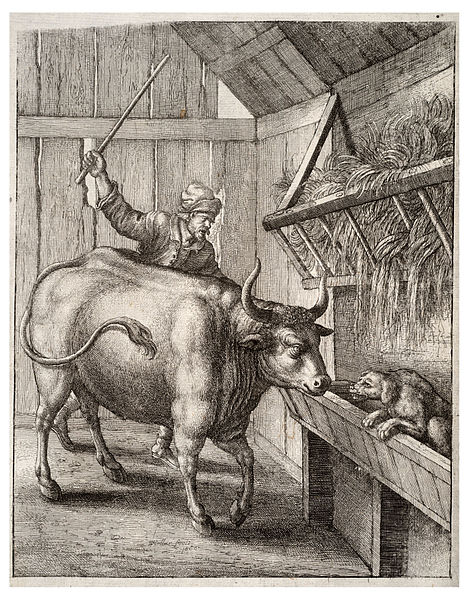
But, is there a bigger lesson to be learned from these cars? How do we determine a moral to the story? I’m not sure if we need spend too much time on that tonight. You will, no doubt, recall the story that Mr. Aesop told of the man who had a valuable goose.  He waited patiently every day and was compensated with one golden egg for his patience.  In a moment of intense greed, the man killed the bird to acquire all of the wealth at one time, but was rewarded with nothing more than an ordinary dead goose.

In a similar manner, simply put, the moral of the cars is this; For a few seconds of pride, a lifetime of usefulness was sacrificed. It’s a moral which could easily fit many other situations, but you will know best how to apply it for yourself.

I’m still learning the lesson, too. Let’s just hope that it doesn’t take another blown head gasket (either the real thing or a more symbolic one) to imprint it indelibly in my feeble brain. 

“A farmer, bent on doubling the profits from his land,
Proceeded to set his soil a two-harvest demand.
Too intent thus on profit, harm himself he must needs;
Instead of corn, he now reaps corn-cockle and weeds.”
(Ignacy Krasicki~Polish moralist~1735-1801)

“Before destruction is pride, and before stumbling–a haughty spirit.”
(Proverbs 16:18~Young’s Literal Translation)

© Paul Phillips. He’s Taken Leave. 2012. All Rights Reserved.