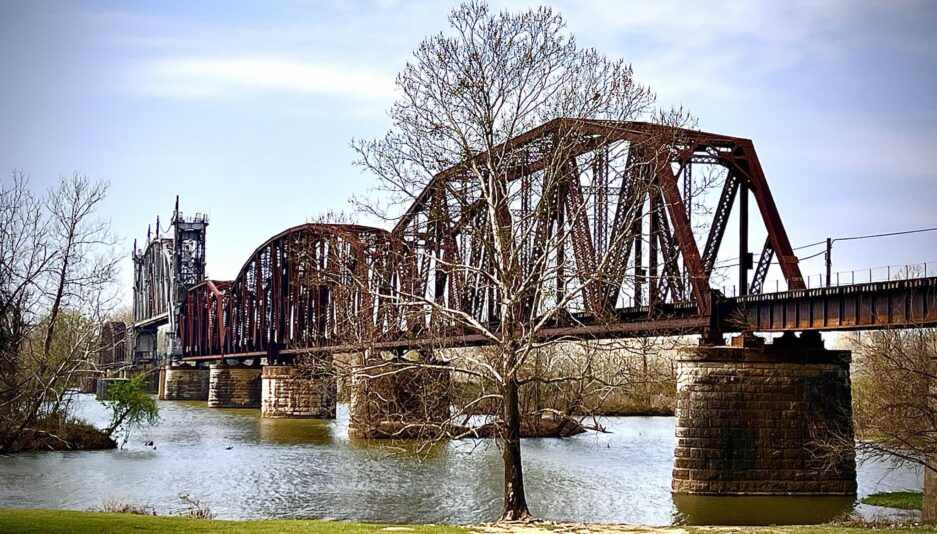
Companionship

Photo by Stephen McCay

She walked with me tonight.  I find myself engaged these days in an activity which I once treated with scorn; something we call exercise.  As a slender young man, confident of good health which would last forever, I promised that I would never walk, or run, or ride a bicycle, simply for the physical activity.  I did participate in all of those, but only for enjoyment.  Riding with friends, playing a pick-up game of football or basketball, even a session of trick catches with the Frisbee in the front yard with her little sister–all those and more would be enough exercise for me.  I laughed scornfully whenever the old people wandered past on their evening walks, anxious to assuage their doctors’ concerns.  “Never!”

But, somehow I’ve gotten off course a bit.  We were talking about her, weren’t we?   Well, actually about her being with me.  She had apologized in advance for slowing me down from my usual breakneck pace, but she needn’t have worried.  I act as if it doesn’t matter that I have to walk or run by myself most nights, but I’d rather have company any day.  Hers anyway.  We do walk rapidly, but we talk, we observe, we enjoy the trip–together.

Oh, it was no romantic walk in the moonlight, mind you.  At one point, we did come upon a young couple having one of those.  They were holding hands and ambling along, looking at each other dreamily.  We zipped past them and chuckled after we were out of earshot.  I told her that we should hold hands, too.  She retorted that my hands were too sweaty and she wasn’t touching them.  Laughing out loud, we sped up to keep our heart rates thumping along at a healthy speed.   But, my mind, as it is wont to do with some frequency, was already in the past, remembering another walk with this Lovely Lady.

It happened thirty-six years ago, if I remember correctly.  A spring evening, nearing twilight, and I was sitting alone on the stone table near the banks of the little creek that winds through our beautiful town.  I wasn’t thinking about how beautiful it was just then.  I was lonely.  Eight hundred miles away from my hometown, I spent my days in working and sitting around waiting to go back to work. There was no one to fill the lonely hours in between.

Suddenly, I looked along the sidewalk back toward the downtown area, and I saw her.  The pretty sixteen year old redhead was tripping along the concrete pathway.  Maybe she would stop and talk to me!  I had met her at church a few months before, so she knew me and–sure enough–she headed toward the table upon which I sat when I waved.  Before I knew it, I was offering to walk with her and she was accepting!  Two blessed miles to her parent’s house!  We didn’t hold hands that time either, but we talked, and we observed, and we enjoyed the trip–together.  Come to think of it, that walk turned out to be almost exactly as long as our walk tonight, because I still had to walk all the way back to my apartment after leaving her at her door.  Four miles I walked that night, too.  It didn’t feel like exercise either, because I was walking on air–both ways.

The memory fades and I am in the present again.  If you read these posts frequently, you will be all too aware that I have been a little down in recent days.  I promised that I would leave my disappointments in a place of  expedience last night.  Sometimes, the realization of the amazing blessings we possess is enough to put those obstacles to joy in the proper perspective.  I don’t wish to mislead you; this particular disappointment is not one which will ever fade into nothingness, but it is one which will fade into an appropriate place in the big picture of life, instead of filling up the lens through which I view the whole of my journey here.

Another four mile walk with the love of my life brings the realization that she has been walking with me for the great majority of my years on this planet.  Our love has changed and grown, as we have matured together.  I am content to have her there beside me still.

Such are the great gifts of a beneficent Creator.  It’s nice to know that He walks beside us too, through the stormy days, the lonely times, and the seasons of weeping, as well as the years of blessing and plenty.

Companionship along the way is nothing to be scoffed at.

Even if she does slow me down a bit, now and then.

“A good companion shortens the longest road.”
(Turkish proverb)

“For if they fall, one will help his companion up, but pity the person who falls down and has no one to help him up.”
(Ecclesiastes 4:10~NET)

© Paul Phillips. He’s Taken Leave. 2013. All Rights Reserved.

Did you enjoy this post?  Let your friends know about it by “liking” our page on Facebook

Disappointed

Disappointment. He had failed in his task.  All he felt was disappointment.  Well, that and embarrassment.  All eyes in the bank’s office space were on the young apprentice electrician.  There weren’t many sympathetic faces attached to those eyes. They didn’t care that he had nearly been electrocuted a moment before; didn’t even care that his new pliers were damaged.  Seconds before, their anguished outbursts had drowned out his surprised yelp as the sparks flew from the outlet near which he stood.  They might be angry.  He was disappointed.

The instructions had been clear.  “We can’t shut off the breakers, because they have to have the computers up and running.  It is essential for us to change out the outlet without interrupting the power.”  The journeyman electrician peered doubtfully at his helper.  “Think you can handle that?”

“You know it!  I can do this–no problem!”  The cocky young man had no doubt that he was up to the task.  What idiot couldn’t undo a couple of screws and move a wire from one device to another without messing something up?  He whipped out his screwdriver and had the cover off in a few seconds, pulling the outlet out from the wall carefully.  Using his screwdriver again, and being careful to avoid touching the metal part of the tool, he loosened the screw on the side of the outlet.  Knowing that he also didn’t want to touch the bare wire with his hand, he reached for his tool pouch at his waist and slipped his new rubber-handled needle nose pliers out.  With the tip of them, he gripped the bare wire and started to work it off of the loosened screw.  It was right about then that the sparks flew.

The apprentice had forgotten how thick the pliers were and had touched them momentarily against the metal box which held the outlet.  Since it was grounded, there was instantly a dead short between the live wire he was removing and the box.  The resulting fireworks may have been brilliant, but they certainly weren’t pretty.  Neither was the language which he heard coming from the surrounding cubicles, as they realized that all their data was lost.  With the breaker popped in the main panel, the very thing they absolutely could not do had happened–the power was off to the computers. He stood dumbly and stared at the melted spot near the tip of his new pliers.  He doesn’t remember much about what happened after that.  Somehow, they got the power back on and the job finished.  He does remember his supervisor being quiet and tight-lipped for all twenty-five miles of the ride home.

The pliers remain in his toolbox, nearly thirty years later.  He still thinks about that day almost every time he picks up the pliers.  Perhaps, that’s the reason he has a different pair of them on top of his workbench for daily use.  Disappointment is a powerful emotion, bringing back an avalanche of feelings time and again.  Even now, decades after the event has become an amusing story to laugh about with his former co-worker, the embarrassment and regret come flooding back anyway.  It might actually be time to dispose of the old pliers altogether.

This aging man is beginning to realize that there are different types of disappointment.  There is the kind of disappointment, or regret, that the electrician felt because of his personal failure.  That young man had a number of subsequent chances to redeem himself in that job.  It seemed to him that his boss was genuinely sorry to see him leave the job a year or so later, so he must have been successful in recovering from that misstep at least.

There is another sort of disappointment, one from which it is more difficult to recover.  Throughout our lives, we place our trust in other people.  And, throughout our lives, they fail us.  Heroes falter; friends waver; family members founder–the list goes on, almost without end.  Funny.  We are surrounded by humans who, like ourselves, are flawed.  Still, we expect the best from them, and are unhappy when they fall flat on their faces.  The reason it is difficult to recover from these disappointments?  We can’t make them right ourselves.  We didn’t falter, or waver, or founder (this time).  The error, the sin, is someone else’s and can only be set right by them.

I am a fixer.  I think we all are.  We want to make things in our world function exactly as they should.  Does the door squeak? I have an oil can for that.  Flat tire?  I have a spare.  I even have advice for anyone who has a problem and asks me.  I want to help. Let me help!

The day comes though, when we arrive at the inevitable conclusion that some repairs are beyond our capabilities.  We all, on any number of occasions, take items to experts to be cared for.  When my car breaks down, I have a mechanic.  My bicycle is in the shop right now because I know that I am out of my depth.  When a family member is ill, the doctor is called.

Why do we find this concept so hard to grasp in other areas of life?  In the course of my own life, I have had numerous instances when disappointment with people I love has been so great that I lie awake at night and try to come up with a solution for their situation.  I weep, and worry, and fret, knowing all the while that I cannot bring about change in any way.  And, therein lies my real problem.

I actually do know the Expert personally, the only One who has the wisdom to help.  His shop is always open; there is never a backlog of jobs waiting before mine.  I have only to carry my friend, or family member, or hero there, to be left in His strong and capable hands.  Oh, I don’t mean that we must drag them there physically.  But, it is certain that our petitions for help from this Great Physician will not fall on deaf ears.

I realize that it’s time for me to make another visit to the repair shop.  I’ve been carrying around a huge disappointment for awhile now.  This particular disappointment is not mine to carry.  I think I’ll give it to Someone who can actually do something about it.  The OPEN sign is alight, even now, in the wee hours of the morning.  You know, there’s a repair shop in your neighborhood, too.

I will also keep working on the personal skills, just to avoid any disappointments with me on your part.  You probably don’t want to ask me to fix any of your electrical problems.

I can loan you a slightly used pair of needle nose pliers, if it will help any.

“Evil lurks where disappointment lodges.”
(George Foreman~American boxer and Baptist minister)

“Do not be anxious about anything, but in every situation, by prayer and petition, with thanksgiving, present your requests to God.”
(Philippians 4:6~NIV)

© Paul Phillips. He’s Taken Leave. 2013. All Rights Reserved.

Did you enjoy this post?  Let your friends know about it by “liking” our page on Facebook

Not Done Yet

Photo by Berit from Redhill/Surrey, UK

The pond is a large one, beside a major roadway.  Each spring, the rains fill it to overflowing, the excess water siphoning over the banks and making broad rivulets down the hillside. That fortunate overflow makes its passage to the river nearby, joining with the rest of the huge torrent as it shoves its way with abandon down the waterway, to join ever wider rivers, eventually making its way inexorably down to the sea.

Fortunate? How could water be fortunate?  I suppose one would have to stay around for a few months to understand that point of view.  The pond, for a short time, is a beautiful sight, so much so that some optimistic folks have built park benches and even a dock from which to fish or swim by its banks.  During the rainy months, there is frequent activity for these improvements; romantic couples sitting by the water’s edge; children splashing and paddling in the clear, sparkling liquid that fills the reservoir.

But, the day will come–sooner than one might think–when no one would consider even sticking a toe in this pond, much less gaze on it admiringly.  The water that was not blessed to make its way to freedom while still clear and refreshing, has turned a grotesquely green hue and is rapidly covered with a layer which defies any brave soul to violate its surface.  Presently, there are  no admirers, and the once-popular retreat is abandoned, bereft of visible activity of any kind.  The unfortunate water that was left behind in the rainy season is trapped in a putrid sea of green, stinky scum.

How could this happen?  What disaster has struck this beautiful body of water, to leave it so; lorn of appeal and purpose?  The answer is simple.  The rainy season has finished and the water that replenishes the pond comes sporadically, but not in a deluge as before.  It does still fall, but none escapes over the side anymore.  The new supply only goes into the depression in the ground, not out of it.  There is no flow, no moving current.  The biological eco-system produces nutrients, lots of them, upon which the algae feeds, and then it thrives in the bright sunlight.  Soon the green scum is out of control, making the pond useless for any kind of recreation.

I thought about that pond today.  A chance conversation with a customer drove my thoughts to that unattractive place.  “I’ve come to the point in my life where there are no expectations of anything from me,” he declared.  I wasn’t sure what he meant, so I prodded a bit.  He explained, “For most of my life, I’ve been engaged and active with other people.  I’m getting older now and I no longer have to interact with them.  I get to just enjoy the things I’ve learned and am learning.”  As he expounded on his justification for this logic, I was shocked to hear him invoke the forty years that Moses spent in the wilderness, along with John on the Island of Patmos, as evidence for his right to withdraw from the mainstream.  It seems that my friend believes that he has earned this respite–that his God has given it to him as a reward for hard work.

I can’t help but draw the parallel with the pond.  Of all the times when he should be sharing in copious quantities what he has learned, he chooses to become a hermit.  Satisfied to keep his knowledge and wisdom to himself, he will die happy.  I say his, but what I intend is that you understand clearly that I don’t believe it is his in any way.  Every single thing we have is a gift; we have deserved none of it.  It not only should be shared, it must be shared.  To keep knowledge and wisdom to ourselves is to become thieves, not once, but twice.  We steal from those who are waiting downstream for the bounty to overflow.  We also steal from ourselves in that we prevent the interaction which keeps us vibrant and active.  Like the pond, what once attracted visitors now repels them.  We even suffer, as all activity moves deep under the surface.  Trapped in an eternal cycle, we regurgitate the same old things again and again, never interacting, never sharing.

Stagnant.  It is a word we use to describe smelly, putrid water that is trapped and still.  It is also what happens to our souls when we move ourselves prematurely out of the current and flow of life.  Give me the white water of the rapids any day!  I want to be rushing to the sea, surrounded by others who are going the same direction. The torrent of the raging river is alive and dynamic; the backwater of the stagnant pond is instead, defunct and listless, going nowhere.

I think I’ll keep rolling along.  There is still a bend or two to go around before I reach the ocean.  The company along the way has been a treat, too.  I hope they’ll keep moving right along with me.  We’ve got lots more to learn together as we go.

Besides, I really don’t fancy that scum-covered green water.  I think I agree wholeheartedly with the always funny Erma Bombeck when she penned those immortal words, “Green is not a happy color.”


“If thou would’st have that stream of hard-earn’d knowledge, of Wisdom heaven-born, remain sweet running waters, thou should’st not leave it to become a stagnant pond.”
(Sir Frances Bacon~English lawyer/philosopher~1561-1626)


“For just as the rain and snow come down from heaven, and do not return there without watering the earth, making it bring forth and sprout, yielding seed for the sower and bread for eating, so will my message be that goes out of my mouth–it won’t return to me empty.  Instead, it will accomplish what I desire, and achieve the purpose for which I sent it.”
(Isaiah 55:10,11~ISV)

© Paul Phillips. He’s Taken Leave. 2013. All Rights Reserved.

Did you enjoy this post?  Let your friends know about it by “liking” our page on Facebook

Blowing on the Coals

Yesterday, it was.  No.  Longer ago than that.  It just seems like yesterday to me.  On a hot summer’s night, with other young men at the summer camp, I stood near a roaring fire.  Each one of us lit a branch in the fire and, speaking of our vision and intent for the future, promised to always play a vital and active role in sharing our faith and hope with the world, tossing our blazing brand into the fire to join with all the other branches from the other participants.  Like the blazing fire, we would yield warmth and light to a world that desperately needed both. Looking into the faces of the guys around me, I was confident that they meant every word, just as I did, and that we would keep that promise.  It was a powerful moment in shaping the man that I would become.

Decades have passed.  As the boy became a man, and spring turned to summer and then fall, at times the fire has faltered–at times it has turned nearly to ash, barely even warming the hands that reached out toward its warming glow.  It turns out that there is a good reason we describe our environment as a cold, cruel world.  We don’t live in perpetual hot summer nights.

Blazing fires use a lot of fuel; especially so in the cold of winter. And, fuel is hard to come by when so many demands are made on the supply.  Family members have need of comfort, friends borrow kindling when their fires have also burned low, the business world sucks the oxygen out of the environment.  In short, the cares of life have done their part to douse the flame.  Like cold water from a bucket, they scatter the live embers, which glow brightly for a moment and are extinguished.

None of this is news to anyone.  It is the human condition to experience hardship, to know want.  Like many others, my life experience has been an ebb and flow of the inner fire burning brightly and, sooner or later, almost not at all.   I am not surprised, but still I am disappointed.

I have walked into homes in the dead of winter, chilled to the bone.  Seeing a glowing fire, I walk near and hold out my hands to the warmth, only to find that there is none.  These so-called electric fires are cheats and frauds, holding out hope of heat, but yielding an almost anemic level of comfort.  Give me a roaring fire in the fireplace any day!

I wonder, is that what other folks think of my personal warmth?  Do they think that I am a cheat and a fraud?  It is possible.  What I do know is that, in spite of the periods of ebbing warmth and comfort, there has always been an ember of promise glowing.  Even when it feels as if there will never be a blazing conflagration again, there is yet that kernel of energy burning in the depths of my heart.  Hardship can’t extinguish it; disappointments fail to smother it; disaster has yet to overcome this burning ember.

Several times over the last few weeks, I have felt the fire blaze up brightly and then, almost without warning, drop down to the point where there was almost no sign of energy to be seen or felt.  Yet still, even in the darkness and the chill, hope flames up once more.  That is the ember–hope.  The Apostle speaks of it, reminding us that suffering produces perseverance, and perseverance produces character.  Most of all, character produces hope, which will not disappoint.

I’m blowing on the ember of hope tonight, giving it a fighting chance to blaze up again.  Perhaps, by morning there will be a full-blown flame on the grate.  Time will tell.

If anyone has an extra log or two to throw in the fireplace, now would be as good a time as any.

S’mores, anyone?

“We fall down, we get up.
And the saints are just the sinners
Who fall down and get up.”
(“We Fall Down” (gospel song)~Bob Carlisle~American singer/songwriter)

“More than that, we rejoice in our sufferings, knowing that suffering produces endurance, and endurance produces character, and character produces hope, and hope does not put us to shame, because God’s love has been poured into our hearts through the Holy Spirit who has been given to us.”
(Romans 5:3-5~ESV)

© Paul Phillips. He’s Taken Leave. 2013. All Rights Reserved.

Did you enjoy this post?  Let your friends know about it by “liking” our page on Facebook

Living the Dream

Someone else said it again today!  I heard the words, and still found them hard to believe.  Yet, over the last few years, I have heard the same thing from a number of people.  The young man came in to buy some guitar accessories, but stayed to talk.  It seems that he loves guitars and wants to learn to repair them.  After several moments in discussion of the activities I do here, he said the words.  “This would be my dream job!”

I wanted to laugh.  Dream job?  My mind went back to when I was a child in school.  The teacher asked what we wanted to be when we grew up.  Did I tell her that I wanted to own a music store?  Ha!  Not in the remotest corner of my mind did the idea of becoming a music store owner pop up.  I never in my life thought that I wanted to run a music store.  Never.  Why in the world would someone think that this would be their dream job?  But, people say this again and again to me.  I’m a little confused.

Tonight, just to be sure about my facts, I even checked the latest list of the top two hundred jobs in America.  Nope.  Music store proprietor doesn’t even make an appearance.  Garbage collector is on there.  Dental assistant made the cut.  You can even find mail carrier, corrections officer, and maid on the list.  No music store owner.  It doesn’t matter.

I still love what I do.  After thirty-five years, I can’t think of any profession I’d rather be in.  But, I never, ever dreamed of doing what I do for all of my adult years.  It wasn’t even a blip on the radar screen of my life’s blueprints.  Perhaps, I just wasn’t the dreaming kind of young man.  Maybe if I had tried, I would have been able to scare up some semblance of this life in my imagination.  Nah–never would have happened.

When the kid said the words earlier today, my reply to him was, “Mine too!”  I wasn’t lying.  Not now.  Over the years, I have come to realize that sometimes God just gives us the good things we failed to ask for, things we never knew we needed. After all, we read that every good gift is from above.  I’m pretty sure that a life spent loving what we do is a good gift.

We all have dreams.  But, more than that, we all have abilities.  It’s a wonderful thing when the abilities and the dreams mesh and our entire life becomes a dream come true.  Sometimes though, we are blessed enough to travel a divergent path, one on which we simply put our abilities into practice and, in the process, are led to a lifetime of fulfillment.

Perhaps we should compile our own list of dream jobs.  The experts would be surprised, wouldn’t they?  I know more than a few ladies who would insist that being a stay-at-home mother is the pinnacle of success.  I won’t disagree.  There is one fellow in my acquaintance who is a kind of picker and makes a living buying items at auction and selling them to various businesses and in flea markets.  He wouldn’t trade places with any man he knows.  Bicycle repairman?  Ditto.  Teacher?  No doubt.  The list would be extensive–and surprising.

I still have other dreams.  I’m not waiting for them until I go somewhere over the rainbow, either.  That’s not where dreams come true, in spite of what we may have been told.

Every good gift, and every perfect gift really does come down from above; coming down from the Father of Lights.

I think I’ll keep looking up!

“God’s gifts put man’s best dreams to shame.”
(Elizabeth Barrett Browning~English poet~1806-1861)

“The mass of men lead lives of quiet desperation.  What is called resignation is confirmed desperation.”
(Henry David Thoreau~American writer/philosopher~1817-1862)

© Paul Phillips. He’s Taken Leave. 2013. All Rights Reserved.

Did you enjoy this post?  Let your friends know about it by “liking” our page on Facebook

Promises to Keep

The family gathered for their traditional Easter dinner, an event that included several branches of the family tree.  The table, really two tables shoved together in the living room to accommodate the entire crew, had been loaded with provision a mere half hour before, but was showing signs of depletion as the diners pushed back in their chairs.  Offers of dessert were met with pained requests to delay the treat until the initial gorging had settled for awhile.  The children headed for parts unknown, confident that the after dinner conversation would be completely uninteresting, a point of view which might be argued to be accurate, even by a few of the adults.  It didn’t matter; by that time most of the folks at the table were too lethargic to care much anyway.  However, one of the little girls wanted to hang around near her grandpa, so she watched her brothers and sister troop out without her.

As she stood next to him, she noticed something.  Poking her grandfather in the mid-section, she was rewarded with a jelly-like bounce of the over-sized abdomen.  “What’s that, Grandpa?”  she queried.

Glancing around to see who else was listening, her grandfather said, in a stage whisper, “That’s my fat belly.” Naturally, the entire tableful of grown-ups chose that moment to cease the hubbub of conversation that had covered the little girl’s question.  They certainly heard his words, and listened with interest to hear her reaction.  She didn’t keep them waiting long.

“I don’t like your fat belly!”  The eavesdroppers guffawed at the embarrassed man, and the little girl suddenly noticed that she wasn’t in a conversation with just her grandfather anymore.  She stiffened her resolve and reiterated her position loudly.  “I just don’t like it!”

“Well then–I’ll get rid of it, Sweetie.”  The aging man didn’t stop to think of the ramifications; he merely said the words to calm her down.  “I’ll get rid of that fat tummy just for you.”  The little blond urchin was mollified, but she still got in a parting shot.

“Good!  ‘Cause I don’t like it.”  And with a baleful glare at the others around the table, she was gone to join her playmates.  The object of her castigation was simply relieved to have the ordeal over.  He didn’t think about it again–until almost a year had passed.  One-fourth of the tyke’s life.

As another Easter approached, the thought intruded (without permission) into his mind again and again, “You made a promise you haven’t kept.”  Funny.  It didn’t feel like a promise when he said it. But now, looking down at his still-fat belly, he heard his own voice clearly in his memory, “I’ll get rid of it, Sweetie.”

It sure sounded like a promise.

Guilt crowded in.  Promises must be kept.  Always.  Even the ones you didn’t intend to make.

So it was that, tardy by a whole year, the little girl’s grandpa sat at the table again as the Easter meal was served.  He made the announcement as the food began to be passed.

“This is my last meal before I start to keep a promise I made to a certain little girl.”

The family, reminded of the conversation, laughed again, but he was dead serious.

The belly is disappearing.  Changes have been made so that the promise may be kept–finally.  His goal within sight, the grandpa is finally beginning to feel that his guilt for forgetting his promise may actually be left behind along with the body fat which is slipping away.

The tale is not told here to focus on any effort by the little sweetheart’s grandfather.  That may or may not be laudable.  The story is passed along solely to have a conversation about keeping promises.

It seems that our society values only promises made to folks who are important enough, or powerful enough, or demanding enough, to bring about the action necessary to fulfill the pledge we have made.  But this is exactly how we miss the point.

Keeping a promise says nothing about the person to whom it was made.  Keeping that promise speaks volumes about the person who makes it.  Integrity demands that we keep our word, regardless of the person to whom we have given that word.

Promises un-kept eat at the soul of the promise breaker.  Promises fulfilled, especially at a cost to one’s self, build character and produce the personal satisfaction that comes simply from doing what is right.

The little girl’s grandpa is choosing his menus with a little self-discipline these days.  He’s also setting aside time on most days to get in some physical exercise.  Somehow, it seems an extremely cheap price to pay for integrity.

Come to think of it, he really didn’t like that fat belly much either.

“The woods are lovely, dark and deep,
But I have promises to keep,
And miles to go before I sleep,
And miles to go before I sleep.”
(from “Stopping By Woods on a Snowy Evening”~ by Robert Frost~American poet~1874-1963)

“If a man makes a vow to the Lord, or takes an oath of binding obligation on himself, he must not break his word, but must do whatever he has promised.”
(Numbers 30:2~NET)

“‘Some people don’t understand the promises they’re making when they make them,’ I said.
“‘Right, of course.  But you keep the promise anyway.  That’s what love is.  Love is keeping the promise anyway.'”
(from “The Fault In Our Stars”~John Green~American author)

© Paul Phillips. He’s Taken Leave. 2013. All Rights Reserved.

Did you enjoy this post?  Let your friends know about it by “liking” our page on Facebook

Night Vision

I have been here before.  I didn’t want to come this way again.

I turned off of this very road and headed for a better part of this town a ways back.  Yet, here I am again, headed for the worst part of town–without question, a depressing place to be.  The strip joints are coming up on my right again, the pawn shops to my left.  And, everywhere I look, liquor stores.  No, not the upmarket kind with perky sales staff asking you if they can recommend a fine wine that will be the perfect accompaniment to the filet mignon you will be serving your guests at your upcoming dinner party.  These are the liquor stores that are always the target of armed robberies in every second-rate detective movie you’ve ever watched; the sort of liquor stores that have winos wandering away from them as they tip up the brown paper bags and take long slugs of the cheap poison inside.  I don’t want to be here anymore.

My trip to the big city has gone from bad to worse while spending two days in a futile search for instruments, which I can sell in my store back home.  The trip has come at a time when we desperately need used band instruments for the kids who will be seeking a horn when school starts in another couple of weeks.  I miscalculated though; schools opened in this city last week, and the shelves have been cleared of any band instruments worthy of the name.  All that is left are pieces of pathetic debris that look vaguely like the trumpets, and the saxes, and especially the flutes that I need, but have no chance of ever playing well again.  Dented bells, cracked bodies, and missing pieces have been the order of the day.  Now, I just want out.

The street on which I travel has many crossroads, but none of them appear to lead to anywhere I wish to go. I simply give up and let the car follow the lane I am in; going past dives and bail-bondsman’s offices, and in front of thrift stores abutting payday loan shops.  I sigh and slip into despair. Nothing.  I am about to turn and retreat back the way I came when suddenly, I spot a little pawn shop with its lights still on.  I am not hopeful, but I’m here already, so I park the car and go in.

The young lady at the counter looks up and greets me as I enter.  My eyes scan the shelves.  As I thought–nothing.  No trumpets, no clarinets, no saxophones.  But then I spy a flute case.  “I’d like to look at that flute, Ma’am,” I intone quietly and with little hope.

She takes it off the shelf and sets the case in front of me.  “Do you play the flute?”  I laugh (a humorless sound) and tell her what I am doing.  “Well, we have just this one flute left–Oh!  There is another one back in the back.  I’ll get it, too.”

I open the case she has deposited on the glass and see that it is just as all the other horns I’ve found in my search.  A cheap thing, it needs a repad and a polish, repairs which will cost much more than the finished product will bring.  I will pass.

As I start to close the case, the young lady returns.  “I’ve only got this Haynes flute.  It’s pretty bad.  You interested?”  It is a good thing that my back is to her, because I’m sure that my mouth dropped open.  Haynes flutes are very fine instruments and highly sought after by professional musicians everywhere.

“Yeah.  I’m done with this one.  I might as well look at that one, too.”  I am trying to be nonchalant, but I must see this instrument.  “Well, let’s see what we’ve–Oh.”  I am stunned.  The solid silver flute is completely black; tarnished beyond recognition.  The rods upon which the keys pivot are corroded and not a single key will budge.  I’m sure that I needn’t mention that the wool pads are all moth eaten, do I?  In short, this flute is in worse condition than any instrument I have looked at in the last two days.

Well, certainly I purchased the flute!  The young lady’s boss set the price, a ridiculously high one (he thought) for a flute in its condition, yet a ridiculously low one (I thought) for a flute of its caliber.  As I walked out to my car, the lights along the street seemed a bit brighter.  This wasn’t such a bad part of town after all, was it?  I noticed that people were talking to each other on the street as they passed one another.  Sure, the liquor stores were still scattered about and the bail-bondsmen, with bright yellow signs screaming their phone numbers to future and past felons, were still lining the road, but inside my car, I was seeing it all in a different light.

This was a find!  With just a few dollars’ investment, it would be worth thousands.  I turned out of the parking lot, headed in the same direction again.  Within minutes, I was in a high class neighborhood, and then on to the expressway out of the drab city.  The lights of home waited to welcome me just moments away.

Dark places abound in this road trip we call life.  Some of us experience them more often than others.  Some of us make them worse than they actually are.  That said, they are still dark places.  When we are in the blackness of despair, or depression, or whatever one needs to call it, we wonder if we will ever stumble out again. Repeatedly, we try the doctor’s cures, or the home remedies and the sure-fire fixes, only to find that the only way out of the darkness is to endure until the dawn, which comes when it will, not when we seek it.  It is not an enjoyable position to find oneself in.

What I am saying tonight is that if we keep moving forward, if we continue to do the things which we know that we must, we may actually exit the darkness with some new-found treasures tucked under our arms.  It won’t happen if we quit moving forward when night falls.  It won’t happen if we decide to wait out the storm, holed up in some storm shelter.  The person who achieves the great coup, the one who gains the great victory is seldom the most intellectual, almost never the strongest, but is consistently the most determined.  The only way to get through is to go through.

As I write tonight, the darkness around me is profound, both literally and symbolically.  A storm rages outside my door and inside my head.

I have been here before.  I didn’t want to come this way again.

I wonder. What treasure will I find this time?
“…forgetting those things in the past and looking forward to what lies ahead, I press on to reach the end of the race and receive the heavenly prize for which God, through Christ Jesus, is calling us.”
(Philippians 3: 13b, 14~NLT)
“If you are going through hell, keep going.”
(Sir Winston Churchill~British statesman and Prime Minister~1874-1965)

© Paul Phillips. He’s Taken Leave. 2013. All Rights Reserved.

Did you enjoy this post?  Let your friends know about it by “liking” our page on Facebook!

Today is Memorial Day Too

I’ve neglected this blog for a couple of weeks.  Probably not many have missed it, but I have missed writing.  It seems that I should offer an attempt at an explanation.  So here goes:  I was busy.

Seriously, I was asked to speak at my church on the Sunday before Memorial Day and I don’t multi-task well, so my time was re-allocated from writing the blog to shoving words around into some semblance of a sermon.  I am happy to have done it; I am also happy to be finished with it.

A couple of folks (but, not the Lovely Lady) suggested that it might be worthwhile to post the sermon here.  Against my better judgment (and possibly hers), I have done that below.  Read it at your own risk.  It is quite long.  But, I believe that God’s Word is worth spending time on.  You will also note that it has some personal references which may only be of interest to the folks to whom it was delivered.

I hope to be back with a few new (shorter) posts very soon.  You have been warned…

Sunday, May 26, 2013
Today is Memorial Day Too
As we meet today, most of you are aware that this weekend we observe Memorial Day.  It is an observance which goes back many years in our country, all the way back to just a few years after the Civil War.  In the late 1860’s families and friends began to gather at military cemeteries usually in late April and in May because of the abundance of blooming flowers in this season, to decorate the graves of the Yankee soldiers who gave their lives defending the Union.  It was called “Decoration Day,” a name which was used until the middle of the twentieth century.  The families and friends of the Confederate dead wished to honor their heroes also and over time the day simply became a day to honor those who had died in battle.  After the day became recognized by the government, for many years May 30th was the date for the national observance of this solemn day. 
There have been other changes to the day, specifically the selection of a different date upon which it is observed and the official name designation of Memorial Day.  The other thing that has changed more recently is the fact that it has largely become a day on which we honor loved ones who have died, not just people in the military who have died in battle.  All you have to do is drive past any cemetery this weekend and you’ll see what I mean.  I’m sure that there are differing opinions about the changes, but regardless, the last Monday in May is the day when we pause to observe Memorial Day, as well as take a day to celebrate family and the beginning of summer.
A couple of weeks ago Pastor Bruce spoke with us about our church’s vision statement and he suggested that we need to know where we are going.  He told of the compasses on lifeboats during WW II and how they pointed the crew of the boats to the shipping lanes, so they would be found.  We do need to know where we are going, but I want to suggest today that, without a clear idea of where the sailors had come from, the compasses wouldn’t have been quite as helpful as you might think.  Sure, the compass shows north and south, but unless one knows their past route, they would have no idea of which direction to steer to achieve their goals.  It is essential to be aware of the past, or we steer blindly into the future.
Since I have the opportunity to speak with you this weekend, I’d like for us to talk a little about memorials and their purpose.  More specifically, we’ll focus on a few memorials in the Word. 
You may remember that we sang an old hymn in our worship time this morning.  I know a few of you noticed some unfamiliar words, didn’t you?  The song was “Come Thou Fount of Every Blessing”, written by Robert Robinson, a British Baptist pastor, in 1757.  I grew up singing those words and this hymn was one of the first things that came to mind when I began considering speaking about memorials a couple of weeks ago.  The second verse is a little obscure, isn’t it?  It wasn’t obscure at all to many of us who grew up singing the words. 
“Here I raise my Ebenezer;
Hither by Thy help I’m come;
And I hope, by Thy good pleasure,
Safely to arrive at home.
Jesus sought me when a stranger,
Wandering from the fold of God;
He, to rescue me from danger,
Interposed His precious blood.
I remember a number of times when the song leader in my home church would stop to explain what “here I raise my Ebenezer” meant before we actually sang the song.   Maybe quite a few of you already knew the origin of the phrase before today.
I Samuel 7:7-13 (click to read passage)
Ebenezer means simply, “Stone of Help”.  After God won the battle and allowed the men of Israel to drive the Philistines from the land, Samuel set up the stone, not as an altar to sacrifice upon, but as a testimony of God’s faithfulness.  It testified not only to the Israelites, but also as a reminder to the Philistines, of the power that protected God’s people.  It wasn’t the power of a magic talisman, as the Israelites had supposed the Ark to be, but it was the power of a God who honors His promises.
The memorial at Ebenezer isn’t really one of the most prominent in the Bible, but I mention it simply to make a point about what it takes to remember something, as well as how we forget some things too. 
When we who are performers prepare to take our material before an audience, we all do something.  Whether public speakers, or actors, or dancers, or musicians, almost without fail we rehearse.   To rehearse means simply to repeat until the desired effect is achieved.  The word “rehearse” actually comes from an Anglo-French word which means “to harrow again”.  If you know what a harrow is, you know that it is a type of plow which takes the big clods of dirt left behind by the blade plow and breaks them up before smoothing the ground down.  You can’t plant a field that has only had a blade used on it, simply because it is too rough and the dirt too hard still.  The harrow must do its work first, then the seed may be sown. 
If you have ever heard a first run through by any of the music groups I’ve been affiliated with, you will understand the analogy of the rough and uneven ground which needs to be sifted and pulverized again and again.  From the lumpy chaotic mountains of upturned dirt, we rehearse, and rehearse, and rehearse again, smoothing down until the finished product is soft and pliable soil, prepared for seeds to be sown.
So it is with memorials, if they are to be remembered.  They must be rehearsed.  The question, “What do these stones mean?” must be answered again and again, reminding each generation what happened at that spot.  We mention Ebenezer this morning simply to make the point that because a few in my generation got tired of rehearsing the story of Samuel and the God who was with the Israelites, we took the mention out of the song, and it has been largely lost on more than one generation since.  It is still a great hymn that shares a great message, just not the reminder of God’s faithfulness in that instance.  This is not a complaint about changing old established songs, but an object lesson of what happens when we forget to rehearse the story of the memorial.
Perhaps a different example a little closer to home will help.  Today is my father’s birthday.  He was born on May 26, 1930.  I remember the day.  I haven’t forgotten it once in the last forty years.  Now, I happen to know that Tuesday is also Jim Pearson’s birthday.  He was born on May 28, 1933.  My apologies to Jim, but I will most likely forget when his birthday is next year.  “Why is that?” you may ask.  The fact is that I’ve had a lot of rehearsals of my father’s birthday, dating back to my early childhood.  There were a few years when I couldn’t remember the date back then, but I was reminded again and again.  We celebrated the day every year with Dad and little by little, the date was fixed in my mind.  I’ve never celebrated Jim’s birthday before.  I only know that it is his birthday because someone mentioned it to me a couple of weeks ago.  I’ll remember the day this year, because my attention has been drawn to it.  Next year, who knows?  But, I will not forget my Dad’s birthday next year and the year after that.  When we rehearse events, they become fixtures in our memories and indeed, in our lives.
Just so, it is essential that we rehearse the memorials in the Word, so that they are fixed in our hearts and minds.  Let’s talk about why.
Memorials speak of God’s promises and faithfulness
Let’s walk back from Samuel and his Ebenezer, about 230 years in the Word of God, back to Joshua 4.  In the interest of saving time, we’ll skip some repetitive sections.  We’re reading verses 4-9 and verses 15-24.
God gave very specific instructions to Joshua.  They were instructions designed to leave no doubt in the people’s minds as to who was responsible for their salvation.  Specifically, God’s chosen people were to use these stones as an object lesson to instruct their own children, and they would teach their children, and they theirs.  The memorial was of God’s faithfulness.  He had never forgotten a single one of His promises to His people and the stones shouted that to them.
(A small rock is laid down on floor behind speaker)  We’re going to set a small stone right there at the crossing of the Jordan River.  God keeps His promises.
Do you notice that right in the middle of his lesson to the Children of Israel, Joshua points back from this memorial, this monument to God’s faithfulness, directly to another one, erected a mere forty years before?  Verse 23 says, “As the Lord your God did to the Red sea, which He dried up before us until we had crossed over.”  I say it was mere 40 years before, but most of these folks couldn’t remember back that far.  Their parents, who had witnessed and lived through the Passover, and the trek across the Red Sea on dry ground, were dead because of their own wickedness. (Notice the different person that Joshua used when he speaks of the Red Sea crossing.  The Jordan River was God doing it for you and the Red Sea crossing was Him doing it for us.  This was a rehearsal of an event which the group to which he is speaking hadn’t experienced themselves.)
Joshua points back to the memorial of the Passover, in a straight line from this one at Gilgal.  Back then, Moses had told them, “Remember this day in which you went out of Egypt, out of the house of bondage; for by strength of hand the Lord brought you out of this place.”  Yet another significant memorial, not one in stones, but one that was to endure to generation after generation.  We’ll talk about this memorial again later.
(Another small rock is placed down slightly behind the first one)  We’ll set another stone there to commemorate the Passover and the release from bondage.  It shows God’s faithfulness in action.
Go back another 500 years and Jacob ( who would be known as Israel) is raising a stone at Bethel (the House of God) where he had his famous dream of the stairway leading up to heaven and God said to him, “…the land on which you lie I will give to you and your descendants.  Also, your descendants shall be as the dust of the earth; you shall spread abroad to the west and east, to the north and the south; and in you and in your seed all the families of the earth shall be blessed.” 
(Another rock is placed on the floor a greater distance back) This is a stone erected to remind men of God’s promise for the future.
And again, another 180 years or so before that, Abram, soon to be Abraham, stood in Shechem and heard God tell him that He would give to Abram’s descendants all the land that he could see, forever.  And Abram built an altar to his faithful God at Shechem.  Again, it was a stone of promise, looking forward to the day that a faithful God would fulfill His word.
(A rock is laid down, further behind the previous one)  Another stone that spoke clearly to all who saw it of God’s promise.
Go way back, another 1000 years or so and we see Noah building an altar to the God who had saved him and the God who said that never again would such a cataclysm come upon mankind.  The stones were lost eons ago, but the sign of the covenant can still be seen when the sun comes out after the rain. The gorgeous rainbow has been relegated to a lucky sign, one at the end of which you may discover a pot of gold.  I think that possibly God’s promise to us is worth infinitely more than some imaginary pot of gold.  “Parents tell your children…” 
(Far behind the others, a stone is laid down)
But, Noah’s altar also brings us to the next thing we need to realize about memorials:
Memorials remind us of man’s weakness and faithlessness.
The altar that Noah built was a testament of God’s faithfulness in the face of man’s depravity.  God himself says, “…although the imagination of man’s hearts is evil from his youth;” The memorial to the faithfulness of God is a testimony against the sin of man.
Moving forward, the memorial of the Passover was itself a remembrance of a sentence of death to the firstborn children of evil men who refused to bow before God.  The Passover not only testified to the power of God to save the slaves in Egypt, it pointed to a greater Passover still to come, made necessary because of the sin of all men.
Again, the passage in Joshua testifies, not only of the power and fealty of Jehovah, it pointed to the sin of the Children of Israel in the wilderness.  Did you notice as we read earlier, that there were actually two memorials built on that day when Joshua told God’s people to tell their children?  You might want to re-read Joshua 4:9 .  I’ve always wondered about the purpose of this smaller mound of stones, built specifically in a place where no one would see it.  I don’t think there is any other mention ever made in scripture about this monument that Joshua himself built without the help of anyone else.  I have an idea about its purpose though.  I can almost see Joshua picking up twelve stones from the east side of the Jordan River, maybe even a little furtively.  In the place where the twelve men representing the twelve tribes removed the huge stones which had to be hoisted onto their shoulders to be carried, Joshua drops these twelve stones.  The huge stones are placed on the western banks at Gilgal, in a place where Joshua calls their attention to the Great God who brought them out of Egypt and through the desert, into the land which he had promised to Abram (later Abraham) and to Jacob (later Israel), and to their parents and grandparents.  The smaller stones disappear from sight as soon as the feet of the Levites carrying the ark touch the western boundary of the Jordan.  I believe that these stones represent the time of captivity in Egypt, the murmuring in the desert, the golden calf, and the refusal to go into the land that God had promised, along with the forty years of wandering.  Symbolically, all washed away behind them, the faithfulness of God standing before them, to be remembered forever. 
Man fails again and again.  God is faithful still, without fail.
We’ve got to look at one more memorial in God’s Word, the ultimate act of God’s faithfulness and demonstration of His infinite love for mankind.  I said we’d talk about the Passover again. 
The last major point to be made about memorials this morning is this:
Memorials point in a straight line to the future, while giving testimony of the past.
So, let’s talk about the Passover.  More specifically, let’s talk about OUR Passover. 
(A final rock is laid down on the communion table in front of the speaker, on the floor level of the sanctuary.)
We rehearsed the story of that memorial again last week, right here at this table.  Our Savior took the memorial of the Passover, instituted some 1500 years before and rehearsed by the Chosen People for generation after generation since…He took that memorial and made it into a new one.  This memorial stands right at the foot of the cross; it is the stone upon which our salvation depends.   The wine represents His blood, which was shed for us, to pay for our sins.  The bread represents His body, which was broken for us.  As He set this stone into place, He reminded us to rehearse it as we gather.  The rehearsal tells the story powerfully, every time we meet at the table.
But, we don’t get to live around the stone.  We can’t stay here constantly.  You see, if you stand right here in front of the table and look at that most important memorial which we celebrate and rehearse as a fellowship, you can’t help but lift up your eyes and see that each one of those other memorials pointed in a straight line to the cross.  However, as you consider it, you realize that they also point past the cross.  Joined with the other stones of God’s faithfully kept promises, together they all point in a straight line to the future, to the place where we walk and talk, and live today.  I think that it may be no coincidence that in this place they point, not to any prayer closet, not to any conference room or fellowship hall, but straight outside into the world.  In here may be where we rehearse the story of the memorials, but it is out there that the stones are being laid still.
Because, you see, as important as that great stone, the stone of Christ’s sacrifice was, it is not the last stone which has been or will be laid.  To be sure, the Apostles and the early Church set up more, but all throughout history, God’s people have laid down memorials, stones of words, stones of actions, stones of lives given in sacrifice to Him.  All of them have pointed, not to the people themselves, but to God and His faithfulness, set in a straight line from those that came before.
Paul made it clear that the stones were not the stones of personal conquests or of prideful exploits.  In Philippians 3, he names his own successes (really failures) in that area, “circumcised the 8th day; of the stock of Israel; of the tribe of Benjamin; a Hebrew of the Hebrews; concerning the law, a Pharisee; concerning zeal, persecuting the church; concerning the righteousness which is in the law, blameless;”.
(A small trophy is set off to the side of the communion table.)
He had set up his own little altar, a trophy shelf stocked with items of personal pride.  “Look at me!” they proclaimed.  But you will note, won’t you, that they took their own little tangent away from the stones of proclamation.  At his coming to Christ, he suddenly became aware that they were out of line with God’s direction, just as little appendage off to the side, leading to nowhere.
The personal trophies weren’t anything to brag about!  They were actually negatives – He calls them “loss”.  Paul understood that his own righteousness, gained apart from his life in Christ, was less than nothing.  In verse 13, when he says, “…forgetting those things which are behind…” he is pointing straight at those personal trophies.  They’re not even something he wants to recall any longer.  Those personal victories and advantages are simply a tangent away from the line of promise, the line of memorials that make the construction of who we are in Christ.  Paul leaves them behind without a backward glance and, aligning himself with the faithfulness of God, reaches forward to the goal. 
We must do the same, kicking over our little hand built memorials to ourselves in the process.  The memorials of the past still stand, giving us direction for the future.  I realize that I’m skipping many stones to get to the present day, but time dictates that I must do that.  There are stones still being placed.  This church is founded on such stones.  We have the foundational stones, but those have been built on again and again.  I think of the Pittman family, who were founding members here and gave the property upon which our buildings stand, before serving the church for many, many years themselves.  Marvin and Wanda Eck gave years of selfless service, building and teaching.  The Hoods gave tirelessly.  I see John Hood in my mind’s eye, standing in an evening service, reminding us that it was time for our music program to move past his generation’s music and on to the future.  “I’ve had my day…”  I still hear his voice, even though he’s been gone many years.  Stones to remember how we got to this place.
I walked through the cemetery the other day and my eye was caught by a stone with the names of Wayne and Betty Brown.  My mind went back thirty-six years as Wayne and Betty worked selflessly to keep New Life Ranch’s facilities working smoothly, cleaning toilets and doing whatever else needed to be done to enable the camp to reach children for God.  When they moved into town, they went to work at JBU, cleaning toilets and anything else that had to be cleaned, to help the university train leaders for ministry in the world.  Throughout, they got up every morning before dawn to meet with their God and start the day in communion with Him.  They raised a daughter who was a missionary in Haiti for many years, and a son who is a Bible translator, and a daughter, Keri…who envisioned and heads up the Right Lead program out at the Ranch today, serving alongside many of you, while rescuing children who are at risk in this world.  Wayne and Betty laid lasting stones to point, not to them, but to a faithful God who saves us still today.
The list goes on, including living builders.  Leo and Sona Setian, Leroy and Wilma Reese (Grandma Reese to many children who grew up in this church), Jim and Barb Caldwell with their rope to keep the Sunday School class in one place while they rehearse the memorials to the two and three year-olds we entrust to them.  There’s a whole sermon in that rope, I think.  The names are too numerous to list, but the names really don’t matter.  The stones don’t point to the people, but to a faithful God who does what He says He will do.
I’d like for us to look at just one more monument today.  I first saw this stone in the fall of 1977.  My sister-in-law asked me to go to the cemetery with her.  My brother was in a class, but she heard that the stone had been placed and she just had to see it immediately.  I went and stood at the stone and wept with her.  I didn’t know Maudie and Dale, but they left behind a monument.  If you’ve ever been in the north edge of the cemetery up along the side near John Brown University, you’ve probably seen this stone.  It doesn’t look like it belongs in a graveyard.  About five feet long and two and a half feet high, it sticks out like a sore thumb.  It did way back then, too.  In 1977, the words were cut into a board.  The family must have figured out over the years that stone stands up to the elements a little better than wood, so the marker is now of granite. 
Maudie and Dale were married before that very stone…Fifteen days before they stood in heaven.  They were killed in a car wreck a short two weeks after they became man and wife.  They didn’t have long to set many stones in this life.  But, “They, being dead, still speak.” 
Here’s the inscription on the marker over the big stone:
“’For the wages of sin is death, but the gift of God is eternal life through Jesus Christ our Lord.’  Romans 6:23
“By faith, Dale and Maudie had accepted that gift.  Through death, the gift was unwrapped for them and its splendor revealed.
“On August 13, 1977 they stood before this old rock and were married.  Just 15 days later they stood before Jesus Christ, the One who gave His precious blood to pay for that gift of eternal life.
“Look at these graves and face the reality of life’s brevity and the certainty of judgment.  Sinner, don’t turn your back on Jesus; to do so is hell forever.  Christian, let’s get the Gospel out.  You may not have known Dale and Maudie.  They were great kids.  When we get to heaven I will take you over to their place and maybe Maudie will fix supper for us.
“God is Good and He makes no mistakes.”
The past stretches behind, the stones piled up to remind us of God’s promises and the ways He keeps them.  The future lies before us, waiting to see what stones we will leave as we walk through it.  What are the markers that will testify of who we are?  Personal successes, even good deeds done for personal glory, point only to ourselves and are of no benefit whatsoever.  If our memorials point back clearly to who God is and the great good news of His salvation for all men, others will be able to follow the markers to a future with Him. 
It’s time to place some stones along the way, ourselves.  It’s time for us to make every day Memorial Day. 


© Paul Phillips. He’s Taken Leave. 2013. All Rights Reserved.

A Safe Place

An afternoon of helpless standing by as the power of nature was displayed for the world to see in a town in Middle America.  Death and shattering devastation seem to defy words of comfort and explanation.  And later, a few moments of fear and relatively minor destruction in our own little town this evening left all of us in the dark, both figuratively and literally.  When the dark closes in, we begin to realize what is true and what is lasting.   

A Safe Place

“Help me, Daddy!”  the terrified young boy screamed.  The family was spending the afternoon at the beach, but things were not going as planned.  The young father had made sure that all of his children learned to swim, at least enough to get out of most normal circumstances they would encounter in the water.  This, however was no normal circumstance.

As Mom and the older sister waded and looked for sea shells, the boys and their dad had opted to swim in the breaking surf.  It was an incredible experience for the boy of nine or so.  He and the others walked out twenty or thirty yards through the breakers; sometimes letting them hit him on the bare stomach; sometimes jumping up in the air as they approached, watching them go past with the white water swirling around his legs.  Deeper and deeper the water became as the shore was left behind.  Chest high, it would reach and suddenly, he would stumble as the ocean floor underneath him rose quickly and he was only knee deep again, yards from the shore.  And the waves!  One after the other, they came incessantly; water piling over on top of water.  Wave after wave pummeling his body, again and again, until he tired of it and just wished for it to stop for a moment.  But, more waves came, wearing the young boys and their father out.

They were spread out a little distance when the father called out to them to head in.  Normally, the call to quit playing would result in a bit of cajoling and coaxing to stay for just a few moments more, but there was none of that this time.  The tired boys headed for the shore.  And then, just feet away from the shore it happened.  The youngest of them suddenly felt the motion of the ocean stronger than he had felt it before.  He couldn’t stand up any longer as he was drawn away from the shore ahead of him.  The beach at South Padre Island is famous for its “rip currents” or undertow, and he was caught in one of those dreaded waves, moving under the surface much faster than it appeared.  The terror was instantaneous.  Along with his brothers, he had learned to swim and was pretty good at it.  Even at that, he was no match for this kind of power.  As his father attempted to swim toward him, he realized the now all-too-apparent phenomenon that accompanied the rip current.  To either side of the outgoing current, the water was still moving strongly toward the shore.  It was immediately clear that he couldn’t reach the boy in time, so he did the only thing he could do.  He yelled!  “Swim!  Swim to the side!  Swim toward me!”  It made no sense to the scared little boy, who was trying to swim directly into shore against the current that was pulling him away from that safe haven, but he turned to the right and swam for all he was worth.  It seemed an eternity that nothing happened, except that he was drawn further out, but stroke by stroke, inch by inch, the lad pulled out of the current and into calm water and safety.

Standing on the firm bottom and shaking from the experience, the only thing he could think about was that his father hadn’t saved him.  All the time he was sure he was drowning, the only thing his father had done was to yell at him.  “Why didn’t you try to pull me out?” he asked accusingly.  The father, no doubt terrified himself, didn’t try to explain his actions, but picked up the little fellow and carried him to shore and his mother.  It would be a long time before the boy understood what had happened that day.  But, he never forgot the experience.

I’ve heard the poem and the song based on it, entitled “Footprints In The Sand” for years.  It’s a tear-jerking piece of poetry that talks about a dream of seeing two sets of footprints and the explanation that they were God’s and the writer’s walking beside each other.  But all of the sudden, there is only one set of footprints and the writer accuses God of leaving, only to learn that at those times which represented troublesome events in life, God carried her or him.  All very beautiful and romantic.  And wrong.  You see, what actually happens is that throughout life, God is imparting his wisdom and knowledge specifically to equip us for the difficult times.  And, as harsh as it seems, when those times come, He knows that we have the tools to face them and get through them.  Truly, we often wonder where He is when the night is darkest, when we fear the worst that can happen.  No, I don’t believe that He leaves us to “sink or swim”, but we’ve been trained in the good times, learned the lessons, and His strength is adequate.  We can face the challenges before us and come through just fine.

As I write tonight, I’m grieving for families who have lost loved ones, suddenly and unexpectedly.  My heart is torn apart for them, envisioning the pain they are feeling and even possibly, the sense that God has left them in the riptide.  Right now, they may be drowning in their loss and emptiness.  My prayer for them is that they will recover with the strength and courage that He has already provided and prepared them with.  His strength is perfected in our weakness.  A Father’s love never fails and never deserts us.

I have never forgotten the terrifying experience in the waves, but sometimes I still need a jolt to be reminded of the real lesson there.  We are safe wherever we go, led by our Father’s strong and able hands.  


“…Be strong and courageous.  Do not be afraid; do not be discouraged,  for the Lord your God will be with you wherever you go.”
(Joshua 1:9)


“Comfort and prosperity have never enriched the world as much as adversity has.”
(Billy Graham~American evangelist)


© Paul Phillips. He’s Taken Leave. 2013. All Rights Reserved. 


Did you enjoy this post?  Let your friends know about it by “liking” our page on Facebook

From Where I’m Sitting

There is a trumpet on my desk.  Not mine.  I don’t play the trumpet.  Well, let me rephrase that.  I can play the notes on a trumpet.  When you know some of the people I’ve had the privilege of calling friends, you’ll understand.  These people play the trumpet.  They don’t push air through their instruments; they breath life into it.  In their hands, the inanimate piece of brass becomes a thing of beauty, evoking emotions, bringing tears to the eyes, inspiring laughter in the soul.  Being able to manipulate the valves and form your lips into approximate shapes to call forth the individual notes?  I don’t call that playing the trumpet.  I don’t play the trumpet.

No.  This trumpet is on my desk because I’m selling it for someone and I need some photos.  Since my former hoarder’s room and photo studio has become my office, the desk has to serve as a prop for the pictures.  But, as I sat at my keyboard tonight and prepared to write again, I happened to glance up from my chair.  The photo you see here is the view from where I’m sitting now.  

Do you see it?  No, not the trumpet.  Do you see what I see?  I see a bridge.  Okay; I will admit it.  I love images of bridges.  My walls are covered with them.  That said, this view tonight inspired an interesting line of thought.

Those of you who play music will understand what a musical bridge is; that passage of music which moves you smoothly from one section of a song to the next one, usually in a different style or possibly even a different key.  But, tonight I’m thinking about music and bridges in a different light.

There is a personal realization that, in many ways, music has itself been a bridge for me.  Watching a video earlier tonight about being bullied, I realized that in my youth, music was a bridge for me from being the odd-man-out to being a part of something important.  “I’m in the band!” was a badge worn proudly by many of my fellow band-geeks.  Before, we had been weird and alone, tormented by the athletes and socialites.  Now, we were weird and part of something!  That bridge had been crossed with music.  Over the years, this bridge has become more familiar, as I have enjoyed helping many folks find the approach to the span between musical illiteracy and the brilliant expanse that is the world of music.  The amazing thing is that other bridges have been built to many people I would never have encountered if my path had never led over the music bridge in the first place.  You will not be surprised to learn that I am still weird and still part of something…

So, the view from where I’m sitting is one of music and of bridges.  There is no doubt that there are many of you who don’t see the same thing from your vantage point.  But, it is just as certain that there is something in your life which you can point to as your bridge – to a different life, to different people, to a different place – where you could never have arrived without it.  It may be a skill you possess, may be a passion burning in you, may even be simply a dream for the future.  Just as in real life, our bridges come in all varieties, some basic and utilitarian, others elaborate and ornate.  All serve the same purpose; to provide passage from one place to another, over barriers that once seemed insurmountable.

There is an innate beauty in any bridge, a beauty which derives from its basic function.  But, I am also partial to the ornamented bridges which, by their decoration, demonstrate the joy which their creator took in designing them.   No ordinary means of mobility, these works of art make it clear that the greatest enjoyment is in the journey itself.  For myself, there are many such bridges in life; faith, family, music, art, friendship; the list goes on and on.  They are bridges to love or to an enriched spirit; even bridges to God Himself.  That’s right.  One of the strongest bridges I know is the bridge of grace, put in place by our Savior as He laid Himself down for us; surely, a very important bridge to traverse.

And, once again, this old rambler has stumbled around for long enough.  Time to head for home. I hope along the way tonight, you’ve seen a bridge or two that you never noticed before.

Beautiful, aren’t they?

Well, they certainly are from where I’m sitting.

“People are lonely because they build walls instead of bridges.”
(Joseph Fort Newton~American pastor~1876-1950)

© Paul Phillips. He’s Taken Leave. 2013. All Rights Reserved.

Did you enjoy this post?  Let your friends know about it by “liking” our page on Facebook!