Thru-Hiking

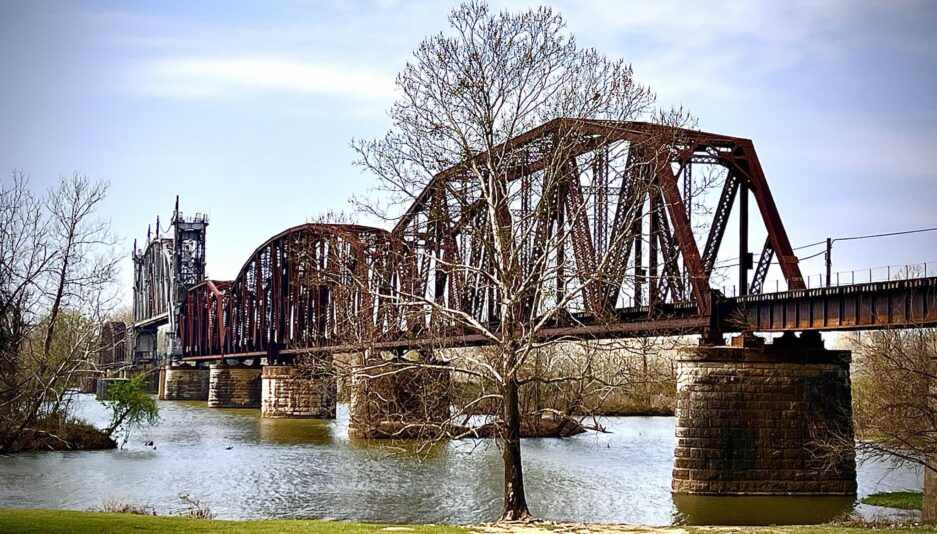
Image by Andre Daniel on Pexels

The tears come more easily these days; I freely admit it.  Still, more than three times in one day used to mean that something was fundamentally wrong.  Trauma, illness, pain, or some such ordeal must have been experienced to cause such a flood of emotion.

None of those is in evidence right now.  But, there have been tears today—several times.

I saw her in the parking lot at the grocery store we sometimes call Smallmart—the lady I once compared to Jesus as He washed His disciples’ feet.  She, weak and uncertain of her own future, had taken the time to help my sister in a terrifying situation in life.  And with her aid to my sister, I was helped as well.

But today, she thanked me for what I wrote about her over a decade ago.  Tears came as I reminded her of how precious her gift was.  Precious to a woman coming to grips with the physical realities of cancer.  And, precious to a man who needed to learn a lesson in having a servant’s heart.

A gift never to be forgotten.

Home again this afternoon, I pulled the mail from the box at the street.  There was a package I hadn’t expected.  The handwritten note inside brought the tears once more.  My old friend thanked me for my tactfulness in a recent situation and for my friendship.

I ruined his life.

Okay, that’s a little over the top.  I was present at a poignant moment a few weeks ago when my friend realized that he had come to the end of a longtime calling in life.  Physical changes are making it impossible for him to do his work effectively.

I tried to be gentle.  It’s not my best attribute, but I did try.  And, he thanked me.  For that, and for an earlier time in our history when we worked through a difficult issue together.

I will treasure his letter.  More than he could know.

But can I admit something to you?

I don’t know what I’m doing.  I didn’t then.  I don’t now.

I’m just now learning how to be an old friend.  (Emphasis on the word “old”.)  I have no expertise in being old. And, I’m not always that good at being a friend, old or otherwise.

But, about being old…

Nothing has prepared me for the losses.  Or the pain.  Or the silences.

As often as not, I feel as if I’ve lost my way.  I started, in my youth, with dreams and plans.  Some of them were met and exceeded.  But now?

I’m not always that sure of my directional skills.

My friends, a young couple who love to walk the wooded trails, the rock-covered pathways, crossing rivers and traversing mountains (I’ve written about them before, you know), are doing a “thru-hike” of the Appalachian Trail this summer.

They started in Georgia a few months ago.  Today in Maine, they passed the 2000-mile mark of the 2190-mile effort.  I am in awe.

I call them a young couple, but in truth, they are deep into middle adulthood, and I’m amazed at their bravery and strength.  And yet, I see the vulnerability in her writing as she sends reports to their cheering section, back home.  Tears have come to my eyes more than once as I’ve read the description of their soon-to-be-completed attempt.

The closing words of her report today had the same effect again.  For the third time on this day, I had to wipe the bothersome fluid from my eyes upon reading the sentiment there.

The AT is going north, but in my heart, I’m walking home.”

I understand.  Oh, I’d never attempt the Appalachian Trail myself.  But I get it.

I’m making a thru-hike of my own, you see.  So is everyone I know.

And, it doesn’t always seem I’m going in the right direction when I’m only trying to get Home.

There’s a map, but sometimes I think the road signs aren’t written in a language I understand.  I took to the road, so certain of my route, but along the way, I’ve become a touch insecure in my sense of direction.

I sat with my PhD buddies at coffee last week and we talked about the changing topography—the shifting landscape.  We agreed it’s not so easy to read the signs anymore.  And, I’m not just talking about failing eyesight.

But, as worried as I am about my companions who think I can be trusted to write the correct words here, or to treat them with the respect due to old friends on the road, I am still certain that the One who began this work in us will see it through to completion. (Philippians 1:6)

He won’t leave us at mile 2000 when we’ve got just 190 more to go.  Even if we’re headed in the other direction, He is faithful.

Faithful.

There’s a reason I’ve mentioned friends and companions so many times in this little essay.  It may be obvious to some of you already.

We are intended to walk the road home with folks who can be depended upon to love us, to correct us, and even to carry us if need be.

“Two are better than one,
Because they have a good reward for their labor.
For if they fall, one will lift up his companion.
But woe to him who is alone when he falls,
For he has no one to help him up.”
(Ecclesiastes 4:9-10, NKJV)

We need each other.  It is our Creator’s design and even His delight.

We sharpen each other, as one piece of iron sharpens another.  We keep each other out of the ditches alongside the lane.

And, we just love each other.  Year after year, day after day, minute after minute, we care for each other as He does for us.

And, we walk each other home.  Sometimes in pain.  Often, through sadness or sickness.  Trembling in fear, we throw our arms around the shoulders of our companions and just walk beside them.

Walking home.

With our family.

My mother-in-law used to get a little mixed up in her directions.  When telling a story, the dear lady would want to indicate the direction in which a building or other such place lay to her listeners, but she couldn’t remember it easily, so she’d just include every point of the compass in her description.

“It was north-south-east-west.  Oh, you know!”

We do know.  And, we can help each other get where we’re going.

Even with tears in our eyes.

Home.


“Roads go ever ever on
Under cloud and under star,
Yet feet that wandering have gone
Turn at last to home afar.”
(from The Hobbit, by J.R.R. Tolkien)

Most important of all, continue to show deep love for each other, for love covers a multitude of sins.”
(1 Peter 4:8, NLT)


© Paul Phillips. He’s Taken Leave. 2025. All Rights Reserved.


Not Home Anymore

It’s not really our home, you know.

I said the words jokingly—actually, only half jokingly—to a guest in our house the other day.

The visitor was visibly surprised.  We’ve lived in the house for a decade and a half, filling the walls with artwork we’ve chosen to fit our taste, and the bookcases with volumes to feed our souls.

The walls still seem to echo with the voices of our grandchildren and college students around the table.  If I listen carefully, I can almost hear the Lovely Lady’s mother’s musical laugh, her idiosyncrasies and stories far outlasting her years on this earth.

The Doxology still rings in the air, sung by voices young and old scattered around the little dining room.  And, before the strains of that beautiful old hymn of praise die down, one may be able to make out the joyful carols sung so many times over the years inside these thick brick walls. 

Many whom we love have crossed the threshold of this wonderful old house while we’ve resided here, a better home than I ever imagined it would be.  The welcome here was always warm, the food delicious, the fellowship all one could ask for.

That was then. 

Home is the place where even the host feels welcome, the retreat where the world is left behind at the door, even if only for a little while.

And God said to Paul and his Lovely Lady, leave behind this beautiful and welcoming home, along with the music store, your vocation and place of ministry for the last thirty years, and go to a place I will show you.  But, not yet.

But, not yet.

Am I comparing my circumstances to Abraham’s?  Really?  I tell you, there have been times over the last few months when I would have told you he had it easy compared to me.

All Abraham had to do was to obey and walk.  God showed him the rest.  Under the great oak tree at Shechem, God waved an arm around and declared that everything he saw was his.  Home.

I hope there is little need for me to reassure the reader I have no illusions about my importance in the grand scheme.  I’m well aware of the part Father Abraham had yet to play in the history of mankind.  

I understand the great faith it took for Abram to leave his family and country and travel, not knowing where he would end up.  I only make the comparison because this Hero of faith had merely to take one step after another until the Lord told him to stop.

A pilgrim no more, he would be home.  Home.

But, I’m sure many can identify with this unsettled feeling I have deep down when I look around me in this old house.  It’s not my home anymore.  Oh, my name (and the Lovely Lady’s) is on the title, but my home is somewhere else.

Or, it would be if I could leave here.  There are still a number of things that have to happen before I walk out the door for the last time.

So, I keep walking back in every evening.  I keep sleeping in (what will be) someone else’s bedroom.  I work in an office that will never truly be mine again.

I’ve got one foot firmly planted in the present, and the other poised to take the next step—to a different place entirely.

It should be time to close one chapter and move to the next.  Only, I keep reading the last paragraph again and again.

I don’t write these words to get sympathy.  Not at all.  I do wonder though, if anyone else can identify with how I’m feeling.

Anyone?

This unsettled feeling—this impatience and restlessness—I wonder, did our Savior ever feel it?

Earth was never His home.  He left His home to live here temporarily, before returning to His rightful home.  (Philippians 2:6-8)

He wasn’t welcome, didn’t get settled in.  He came to His people and they didn’t accept Him.  (John 1:11)  

He didn’t even have a place he wanted to call His own.  The birds and animals had homes, but the Son of Man didn’t even have a place to lay His head.  (Matthew 8:20)

He didn’t settle in.  He never got comfortable.  He was Creator of all that is and there was no place here for Him to call home.

The task for which He came still lay ahead of Him.  And, after that—home.  

Really.  Home.

And, after that—home. Really. Home. Share on X

I’m realizing something, these days as I miss the home that was and look forward to the home that will be.  I’m realizing I’ll never really be settled-in there either.  It may be the place I reside for the rest of my life—or not.  Regardless, it won’t really be home, either.

Just as now, when I gaze across the bridge to the next place, in my heart, I’ll someday be looking across the river to that place, my last and final destination and feel the need to go home.

I may even wonder, as I do now, why I have to wait—why I have to keep one foot in the present and have the other ready to take that step into eternity.

For right now, I’d settle for simply taking the next step.

Just one will do.

For a start.

Leaving home—to go home.


And then it happens all at once and unexpectedly. That is how things happen, I suppose. You pack your bags and find yourself walking yourself home.
(Shannon L Alder ~ American author)


Abraham was confidently looking forward to a city with eternal foundations, a city designed and built by God.
(Hebrews 11:10 ~ NLTHoly Bible, New Living Translation, copyright © 1996, 2004, 2015 by Tyndale House Foundation. All rights reserved.)


© Paul Phillips. He’s Taken Leave. 2017. All Rights Reserved.

Frozen Words

Photo: Jeannean Ryman Used with permission.
Photo: Jeannean Ryman. Used with permission.

I knew you were no good.

Nearly two weeks later, the words still hang in the frigid air of the Chinese restaurant.  The cold gale is still blowing through that door held open by the helpful stranger.

And the words still hang there.  They are colder than the air blowing in from outside.

I knew you were no good.

It’s warmer there now, I know.  But my mind can’t move on.  She said the words to me.  To me.

Her baby.

They had warned me that angry words might come.  I was prepared to be kicked out of her house, along with the others.  I was even prepared for the conversational words she would speak which would have nothing to do with any conversation going on in the vicinity.  The disease from which she suffers has robbed her (and us) of the reality we have shared for all of my life.  I know that.

When she said the words to me, I didn’t react—in fact, didn’t think anything of it.  It wasn’t really her saying that to me; it was this different person who has no memory of the past left, speaking to a man she didn’t recognize.

I know that.

Still.

Back home now, lying in my bed at night, the words have echoed in my head.  My mother, who never in all of my life uttered a cruel word to me, told me to my face that I was no good.

The facts of her illness, I know—intellectually.  My problem is the event happened to me—personally.  My brain struggles to keep the two straight, failing miserably.

I’ll sort it out, eventually.

Still.  The words hang, frozen by the frigid wintry blast.  And, sitting here in my cozy corner, I shiver.

She doesn’t know me anymore.  She doesn’t recall she had any children, can’t remember who my father is.  Even though she can’t stand for him to be out of her sight, she couldn’t tell you who the man is.

I wonder what it would be like to be surrounded by strangers in your own home.  I even have this strange thought that starts to take root, asking: what if she no longer knows who God is?

Ah, but you see, now the worries and the what ifs, and the if onlys start to tumble one by one, when I reach that question.

The reality is that whether or not she knows Him anymore is not nearly as important as the answer that stands above every question in my long list.

He still knows her.

He still calls to her.

He still communicates with her.

Don’t believe me?

That very morning, in a little church fellowship hall, I sat beside her, a stranger sharing his hymnal with her.  She took hold of the edge of the book and tugged it over in front of her, soon commandeering well more than her share of the page.  And, without a thought in the world about who was listening, she sang.  As loudly as she could, she sang.

Me too.

Song after song, we shared that book—I, finding the right pages for her, and she, pulling more and more of the volume her way, until I held nearly none of it in my own hand.

That red-headed lady who raised me taught me to sing in church.

I spoke of it with that other red-headed person in my life, the Lovely Lady, just the other day.  I don’t know any other way to sing.

Why would you worry about who hears you?  You’re not singing for them!  All my life, growing up, I heard it and saw it modeled.

Sing it out!

My Mama and I sang for the One who still knows her.  And me.  A couple of ladies in the church mentioned my singing later.

I’m still not sorry I sang so loud.

You know, as I sit and write, I glance mentally over at those horrid words, frozen in time.  Funny thing.  They’re not frozen anymore.  They’re just mixed in with the rest of our conversation and communication from that day.

Come to think of it, they weren’t all that untrue.  That lady spent a lifetime understanding that none of us is born good, and she tried to do everything she could to help me past that.  She taught and sang, begged and demanded, all the while trying to help form and shape a man who would be good.

I’m not there yet.  But, I got some world class coaching along the way.

Oh, and an introduction to the One who will make me good.

I’ll keep moving.

And singing at the top of my lungs for Him.


…the sheep recognize His voice and come to Him.  He calls His own sheep by name and leads them out.
(John 10:3 ~ NLT)


My mama loves me, she loves me.
She gets down on her knees and hugs me.
She loves me like a rock
She rocks me like the Rock of Ages, and she loves me.
(from Loves Me Like a Rock ~ Paul Simon ~ American singer/songwriter)


© Paul Phillips. He’s Taken Leave. 2015, 2017. All Rights Reserved.


Photo courtesy of Jeannean Ryman.  Used with permission.  Jeannean has many of her wonderful images available for sale and for use in projects.  Contact us if you’d like to communicate with her.