These Eyes Must Be Defective

I’ve mentioned it before.  Perhaps more than once.

I even asked my eye surgeon, a few years ago, if the procedure he was about to undertake on my eyes would help alleviate the issue.  Alas, he said it wouldn’t, and it didn’t.

The problem is, I cry too easily these days. When family comes to visit.  When they leave.  When someone cries in a video clip or a movie I’m watching.  When friends pass away.  When my grandson skins his knee.  When the Lovely Lady is in pain.

The list goes on and on.  Last Sunday, I even cried when we read the passage in the Bible that would be the speaker’s text for the day.

I don’t even understand that.  The passage was Psalm 23—an ubiquitous section of scripture if there has ever been one.

The person who read the day’s scripture asked the gathered folks if we would all read aloud whatever version of the Bible we held—or had memorized.  I quoted the King James—just because.  It’s what I memorized many passages from in my younger years.  I still like it, not because I believe it to be superior to all other English versions (I don’t), but because I love the poetic flow and the old English phrases that stick in the mind long after the reading is done.

I was just fine until we reached verse 6.  I had noticed the minor disparity between versions through all of the first five verses, but somehow in that last verse, the differences seemed to disappear.  I don’t know if they really did; it just seemed so to me.

My eyes filled with tears, and my voice, usually loud and firm, faded to nothing.  Even so, the words echoed in my head.

“Surely goodness and mercy shall follow me all the days of my life: and I will dwell in the house of the Lord for ever.”  (Psalm 23:6, KJV)

They are echoing still, even as I write the words.

Heaven seems so near.  One could almost reach out and touch it.

I’ve been working on a song for piano for the last couple of weeks.  It’s not getting that much better as far as the technical details—including too many sixteenth notes and more than a few tricky chords—go.  But there are pictures in my head as I play it that go right along with that last verse of the ubiquitous Psalm we read.

It seems like I haven’t heard the story since my Sunday School days in that little red brick church in McAllen, Texas, sixty years ago.  My mind probably forgets recent mentions of the story.  It does that these days.  I remember events that occurred in childhood better than those that transpired ten years ago.

You remember the story of what we call Jacob’s Ladder.  It’s found in Genesis 28.  You should read it for yourself.  Later.  Stick with me for now—okay?

Jacob was running from his brother Esau, whom he had tricked out of his birthright.  But he was exhausted, so he found a place off the beaten path and, taking a large stone for a pillow, fell asleep.  It wasn’t to be a dreamless sleep.

In his dream, he saw stairs coming down to earth from heaven, with angels making the trip back and forth.  God stood at the top, in heaven, and He stated again to Jacob the promises He had made to Jacob’s grandfather, Abraham.

When Jacob awoke, he realized that he had chosen a holy place to lay his head upon that stone, so he set the stone upright there, and consecrated it as an altar, giving the place a new name.

Beth-el.

It means the House of the LORD.

I want to write the word David used often in the Psalms when he thought his readers needed to stop and let a thought sink in.  So I shall.

Selah.

People speak of “thin places” in the world, meaning places where God seems especially near to us.  I can’t think of a thinner place than this Beth-el.

The House of the Lord.  The place where the bridge (or stairs) stands between earth and heaven.

There is a good bit of doctrine that wants to be examined and discussed here.  I shall studiously avoid doing that.  Many others have covered the subject before me.

But I’d love it if you, should you choose to listen to the piano piece linked below, would think about its lyrics, and consider the One who actually is our bridge to heaven and eternal life with God.

He said the words Himself;

“I am the Way, the Truth, and the Life.  No man comes to the Father, but by me.” (John 14:6)

And I shall dwell in the house of the Lord.

Forever.

Even if your eyes—like mine—are defective and the tears flow.  There will come a day when He Himself will wipe them all away.

In the House of the Lord.

“Nearer, my God, to thee, nearer to thee!
E’en though it be a cross that raiseth me.
Still all my song shall be, nearer, my God, to thee,
Nearer, my God, to thee, nearer to thee!

Though like the wanderer, the sun gone down,
Darkness be over me, my rest a stone,
Yet in my dreams I’d be, nearer, my God, to thee,
Nearer, my God, to thee, nearer to thee!

There let the way appear, steps unto heav’n;
All that thou sendest me, in mercy giv’n;
Angels to beckon me, nearer, my God, to thee,
Nearer, my God, to thee, nearer to thee!

(Nearer My God to Thee, words by Sarah Flower Adams, 1841)

© Paul Phillips. He’s Taken Leave. 2026. All Rights Reserved.

Rocking Chairs, Neighbors, and Heaven

Personal image

“Do you want to go inside?  It’s hot out here.”

I asked the question of the little tyke sitting in the rocking chair next to the nearly identical one in which I rocked.  My grandson had required a little aid climbing up into the big black chair, but it seemed likely I would need his aid when it was time to stand up again.

“No.  I like it here,” was all he said in reply, keeping the motion of the chair going with only his arms—his legs being much too short to let his feet push off the concrete below us.

I like this kid.  I do.

He takes to new things like most folks gravitate to the old and familiar.  Give him a moment to consider a new food, and he’s likely to say, “Why not?”  He may reject it just as quickly after the trial, but he’s game to give it a shot.

Me?  I like the old paths—worn smooth by years of use, and leading to destinations I’ve visited many times before.

But here I go again, chasing rabbits when I’ve not even begun to follow the path I started out upon.

I want to talk about those rocking chairs.

Well, to be honest, I already did talk about them.  At the memorial service for my sweet neighbor yesterday, I talked about them.  But I want to talk about them a little more here.

I’ve written a number of times, over the last few years, of the delightful neighborhood the Lovely Lady and I have the privilege of calling home.  Many of the folks who dwell around us have lived here for 30 or 40 years, and some for close to 60.  It is the neighborhood in which the Lovely Lady grew up.

The thing about folks having lived here for as long as they have is that it means many of us are what we call senior citizens.  And, it seems, time is growing short for some of us.  In reality, it is growing shorter for all of us.

The house on the corner was home, for nearly sixty years, to two lovely people, who had a better view of the neighborhood than anyone on the street.  Sitting on their back deck, they could view every foot of the cul-de-sac street (and most of the homes thereupon).

On many days, as I walked out of the neighborhood to stretch my legs a bit, the aging couple would be sitting in the same rocking chairs you see in the photo that accompanies these words.  I usually wandered over to the four-foot-high chain-link fence around their backyard and, leaning on the top rail, would engage the couple in conversation.  Often, at a break in the discussion, he would make a suggestion.

“Why don’t you come on up here and sit with us, young man?”

Never mind that I have not at any point in my residence in this neighborhood been a young man.  I would usually declare a mental hiatus in my exercise program for the day, and wander onto the covered deck to sit, and to speak and be spoken to.

I cannot express what those conversations meant to me.  I learned more about the history of the Christian university a couple of blocks up the street from me on that porch than I had in forty years of living in this town.  I learned about the people—many of them, faculty at that university—who used to live in different houses on the street.  I learned about—well, you’re not interested in all the different people and things we talked about, but what I actually learned about, sitting on that deck, across from that dear couple, was how to be a neighbor and a friend.

But night after night, those rocking chairs welcomed their occupants, ready to undulate gently, forward and back, as they sat, watching and listening to the microcosm of our little neighborhood.

A few years ago, Skip passed away.  The sadness lingers.  In truth, I think it always will.

Still, watching Patty carrying on without her life’s companion, I noticed that she came out on that deck most evenings and sat in her rocking chair—watching over the neighborhood as she had with Skip for many years before.

But, as always happens when enough time passes, the years of her life here on earth came to an end.  And both rocking chairs were stilled and empty.

C.S. Lewis suggested, in The Last Battle from The Chronicles of Narnia, that the things here on earth are merely a shadow of what will be in heaven.  I don’t in any way give doctrinal weight to his words, but it leads me to consider the meaning of the New Earth mentioned along with the New Heaven in Revelation 21:1.  And momentarily, for me to see the image in my mind’s eye.

Jesus told His followers in John 14: 2-3 that in His Father’s house, there were many houses (mansions, if you prefer the King James) and that He was going there to prepare a place for us.  It’s not clear if the houses have already been built, or if they have yet to be completed.

But my friend, Skip, was a builder for a number of his years on earth.  And, knowing him, he may have had a suggestion or two for his and Patty’s place up there.  I wonder if those suggestions included a covered deck with rockers in which they can sit and enjoy the music and sounds of worship for all of eternity.

Almost as when they lived here, next to the music-filled house in which I now reside.  For all of the last seventy-five years, piano and brass, viola and flute music has wafted across the grass-covered, maple and oak-shaded ground between this house and theirs.  There is no way they sat on that deck and didn’t hear that music (not all of it heavenly).

If his request for the deck and rockers was honored, perhaps the two of them sit once more listening and watching.

And, I’m a little jealous.  What a joyous day that will be, when we get to make music in praise of our astonishing Creator up there together!

And perhaps, simply to sit and drink it all in, on the back porch of our house He built for us.

I made the observation, as I prepared to lead that old hymn, Amazing Grace, at the service Patty’s family had to honor her, that they’re not really getting a head-start on us.

Mr Newton understood the math.

“When we’ve been there ten thousand years,
Bright-shining as the sun,
We’ve no less days to sing God’s praise
Than when we’d first begun.”

It’ll be our turn soon enough.

We were honored to receive the gift of those rocking chairs to sit on our front porch a day ago.  They’ve already received the stamp of approval from our youngest grandson.  Others may approve in time, as well.

I think we can spend an hour or two loving our neighbors there.

And maybe even humming a verse or two of some lovely old hymns.

Forever is still in front of us.

But we can rest at times on the way there.


“This is my real country! I belong here. This is the land I have been looking for all my life, though I never knew it till now. The reason why we loved the old Narnia is that it sometimes looked a little like this…. Come further up, come further in!” (from The Last Battle in The Chronicles of Narnia, by C.S. Lewis)


“The righteous man walks in his integrity; his children are blessed after him.” (Proverbs 10:7, KJV)

© Paul Phillips. He’s Taken Leave. 2026. All Rights Reserved.

Anticipation

Kindred Spirits—Asher Durand

We didn’t plan it.  To be clear, it was my stubbornness that put us there.  On that steep road.  With switchbacks where the pavement beneath us disappeared from view and we prayed we wouldn’t meet another vehicle.

The Lovely Lady and I took a short break a week or two ago.  And truthfully, she is the one who needed a break (since I don’t do enough to earn time off), but she was kind enough to let me tag along.

With her trusty Rand-McNally road atlas on her lap, we drove a couple of hours south to the highest point in our state and took a room at the top of the lodge on Mount Magazine. 

It was great.  Relaxing and awe-inspiring at the same time.

But we wanted more.  So we drove a few miles east to visit more mountains.  The state park is named for the man they called Little John.  Except he was actually a woman named Adrienne who disguised herself to travel from France to the United States in the 1700s. 

And, in French, the language they speak where she came from, her fellow travellers actually called her Petit Jean. Her grave is there in that beautiful state park.

After we left that mountaintop, we headed back toward the lodge.  I asked the disembodied voice we call Siri to map our route back to the other mountain, where we could rest before more adventures the next day.  

The route the voice suggested wasn’t to my liking.  I was sure I knew better and turned the opposite direction.  The Lovely Lady still had her atlas handy and quickly suggested the voice was correct.  I turned on a side road to get back to the prescribed route. 

I don’t often ignore or argue with the voice that’s connected to that red-headed lady who rides with me.

The side road I turned on had a large sign just ahead of us.  

“Mount Nebo State Park 4 Miles Ahead,” it said.

We’ve never been there.  And it was only 4 miles.

We went straight.

I should say, for about 3 miles we went straight.  Then we went straight up.  Well, that’s what it felt like.  The road was an 18% grade!  With 11 switchbacks.  And no place to turn around, should one change their mind about being adventurous.

Finally at the top, we stood on the edge of the mountain and viewed the River Valley below.  The huge manmade lake in the distance gleamed in the sunshine.  On its banks, the cooling tower of the power plant called Nuclear One looked like a little kitchen funnel turned upside down.  

As we stood on the edge of that precipice, a name came to mind.  Marvin Eck.  It took me a minute to get the synapses charged and connecting, but it came eventually.

Marvin Eck was the old pastor at the church we attend.  It is the church the Lovely Lady grew up in.  The church where I met her.  The church in which we were married.  Quite possibly, the church where our funerals will take place.  We’re boring like that.

Marvin Eck wasn’t boring.  He lived on a rocky hillside in Oklahoma, where he and his wife, Wanda (who he lovingly called Baby Doll—to her feigned embarrassment), scratched out a flat space for a lovely home built with their own hands and then a few more square feet for a garden that yielded copious crops of vegetables and even more lovely flowers. 

When I first knew him, he called the hillside Beulah Land.  We understood completely.  Beulah, when mentioned in Isaiah 62:4, is a prophetic name for the Promised Land.  The name means “marriage”, signifying the fellowship of God with His people.  It’s a lovely picture of heaven.  And to us, the Eck’s place seemed like a little bit of heaven on earth.

But suddenly, one day, he started calling the hillside Mount Nebo. I don’t remember the exact explanation, but in effect, he told us he wasn’t in heaven yet.

I hadn’t thought much about it, either back all those years ago, or in the years that have intervened.  I thought about it on that mountaintop, looking over that beautiful valley to the other mountains nearby.

Do you know that Moses stood on the original Mount Nebo (which is in modern-day Jordan) and looked over into the Promised Land?  Deuteronomy 34 tells the story. 

So close.  So close and yet, so very far.

He would never enter the land while he lived. But, although I’ve never heard any sermons on it, I can point to a time when Moses stood in the “land flowing with milk and honey”. 

If popular belief in the Holy Land today is correct, Mount Tabor in northern Israel was the Mount of Transfiguration, spoken of in the Gospels.  There, on a mountain that would have been visible to Moses standing in disappointment with his God on Mount Nebo, he and the prophet Elijah stood in triumph with the Glorified Messiah and a few of His chosen followers.  I’m not sure if there is all that much to learn from this fact, but it makes me happy to think about it.

So, there it is; Mount Nebo looks over to the Promised Land.  Just like Marvin Eck did symbolically on his hillside before he and his Baby Doll actually made the move there some years ago.

It’s a strange thing to think about while standing on a precipice overlooking the River Valley of Arkansas.  I do that.  Think about strange things. At strange times.

But the memories of Marvin Eck are pleasant.  And the thought that we are standing on this mountain (wherever you or I may find ourselves now), looking over into Beulah Land, and knowing we will be there one day ourselves, is a little overwhelming.

I’ve talked before about home being, not the place we come from, but the place we really belong.  On more than one occasion, I’ve written about Margaret Campbell, an old saint who the kids around here called simply Miss Peggy. 

I can never forget the day I sat with her in her home when she, all of 91 or 92 years old, looked through me with her unseeing eyes and told me, “I want to go home.”  I understand her better than ever now.

Home, where we belong.

The road up Mount Nebo is hard and steep, but the view of eternity is spectacular from those heights.

And be careful coming back down to the valley below.  There are still a few miles to go before we’re home.  

And perhaps, a few more switchbacks to navigate along the way.

“Walking along life’s road one day,
I heard a voice so sweetly say,
‘A place up in heav’n I am building thee,
A beautiful, beautiful home.’

Home, sweet home—home, sweet home,
Where I’ll never roam.
I see the light of that city so bright,
My home, sweet home.”

(from My Home Sweet Home, by N B Vandall, 1926)


“You shall no more be termed Forsaken, and your land shall no more be termed Desolate, but you shall be called My Delight Is in Her, and your land Married; for the Lord delights in you, and your land shall be married.” (Isaiah 62:4, ESV)

© Paul Phillips. He’s Taken Leave. 2026. All Rights Reserved.

Homeward Bound

image by Leroy Skalstad on Pixabay

I want it to be true.

She said she had learned recently that the name common for homeless wanderers in the last century meant something almost romantic.  We were talking about hobos, those bindle-toting fellows who rode the rails during the Great Depression, knocking on doors in small towns across the country as they looked for handouts—mostly food, sometimes money.

My guest told me the article she read suggested the word hobo was short for homeward bound.

I’ve done a bit of reading on the subject and find that explanation surfaced rather recently, extrapolated by a writer or two, coming from the soldiers who were traveling after the Civil War in the 19th century, saying they were homeward bound, only to realize when they got there that their homes had been destroyed in the conflict.

It seems more likely that the term came from the name given to the farmer boys who left their farms to look for a better life.  Hoe-boys, they were called.

There was a day when I answered my grandmother’s inevitable question of what I intended to do with my life with the suggestion that I wanted to be a hobo.  What I really meant was I wanted to live the life of a bum, but have the assurance of a home to return to and the promise of financial support, should I get hungry and cold.

I grew up and out of that mindset, thankfully.  I did leave home, striking out to new horizons, but I put down roots and got a job immediately.  The wandering life wasn’t for me, much to my grandmother’s relief.

Still, I like the idea of being homeward bound.  Even after all the years of living nearly a thousand miles away, the reminders of my hometown I see almost daily induce a sort of homesickness in me.

I wonder.  Why do we look for a place to call home?

Several years ago I wrote of my friend, Miss Peggy.  She, in her ninety-first year of life, fussed at me one day because her friend had died.  The friend was younger, probably in her late eighties.

“It wasn’t her turn!”  Miss Peggy was adamant—almost angry.

I held back the laugh that threatened to burst out.  I had never considered this concept of standing in line, waiting to get into Heaven.  In my mind’s eye, I could visualize her friend, an old spinster just like Miss Peggy, cutting the line up ahead of those waiting impatiently.

The impulse to laugh died suddenly as Peggy tilted her head wistfully, letting the words spill out.

“I want to go home.”

Surrounded by her belongings, in her own cozy house, she wanted to be home.  Really home.

I guess that’s what it’s like when you’ve been on the road so long. You just want to be home.

Not many of us are hobos, but all of us—if we’re God’s children—are homeward bound.

Just like Abraham and his offspring—like Moses and his wandering, grumbling tagalongs—we’re looking for the place of promised rest.

And, it’s not the place we came from.  No, we’re going home.

Homeward bound.

And, in the meantime, our Creator’s got some green pastures and quiet waters for us to travel past.  And, yeah.  A dark valley or two.

But, there’s goodness.  And mercy.  All the days of our lives.

Until we’re finally home.

Looks like we’re headed the same direction.  Maybe we could jump a freight train together sometime.

Homeward bound.


“They agreed that they were foreigners and nomads here on earth.  Obviously people who say such things are looking forward to a country they can call their own. If they had longed for the country they came from, they could have gone back. But they were looking for a better place, a heavenly homeland. That is why God is not ashamed to be called their God, for he has prepared a city for them.”
(Hebrews 11:13-16, NLT)

“Would you welcome going home
   If you’d never been away?
I don’t think so.
I don’t think so.
I really don’t think so.”
(from Would You by Evie Tornquist Karllson)


© Paul Phillips. He’s Taken Leave. 2024. All Rights Reserved.


The Old Barn in Spring

My father told of walking in the early 1950s across the yard beside what is now my home to reach Dr. Wills’ barn and pick up a gallon of fresh milk from his Jersey cows. As he told me the story, I could almost see him and his brother, my Uncle Edward, striding across this very field and then my yard.

I stood in the field this afternoon, soaking in the spring warmth and letting the memories wash over me.

I never knew, until the last years of his life, that Dad had ever been to this little town before my brothers and I settled here after leaving South Texas in the seventies.

I think I understand, a little, why it felt so much like coming home when I first visited here. It has never felt different in the nearly half-century since.

But, I wonder sometimes if that’s a little how it will feel to walk into our forever home.

I think it might.

Home. Where we belong.

I hope it’ll be springtime. With two brothers carrying bottles of fresh milk home for breakfast.

And wildflowers everywhere.


© Paul Phillips. He’s Taken Leave. 2023. All Rights Reserved.

Endings Become Beginnings

Abnormal.

That was the one-word description I read when I checked the medical app a couple of weeks ago.  I had received an email informing me the doctor had posted the result of my recent procedure, so I thumbed my way through the sign-in process to get the good news.

It was what I was expecting.  Good news.  I’d like to believe I’m not a perpetual pessimist, expecting the worst all the time.  Still, I wasn’t shocked to read the word I found there.

Abnormal.

There was nothing else, except a reminder of an appointment with the surgeon in a week.  On the day of the Vernal Equinox.

It seemed appropriate.  The end of a season.  The beginning of another.  Both on the same day.

One, I have grown to detest.  The other, I love.  The reader will no doubt draw their own conclusion as to which is which.

I waited.  Concentrating on the word, abnormal, I waited.

I had an inkling of the meaning.  Last year, a similar procedure yielded the word precancerous.  Now, this follow-up procedure had yielded a new word.

It’s funny, the things one’s brain will jump to, given time.  And, I had plenty of time on my hands.

Abnormal is the opposite of normal.  Somehow, we prefer the latter to the former.  It seems odd, because we don’t really care for average, which is surprisingly similar to normal.

Next, my mind landed on the word I may have been searching for in the first place: peculiar.  It is a word which twins abnormal rather well, don’t you think?

We think of peculiar as meaning odd, or strange.  That’s the same as abnormal, is it not?

But then, there’s another definition that says peculiar means belonging exclusively to one genre, area, or person.

And, that’s me.  Perhaps, you too.

The Fisherman who came to be known as The Rock gave us the description a couple of thousand years ago.

“But ye are a chosen generation, a royal priesthood, an holy nation, a peculiar people; that ye should shew forth the praises of him who hath called you out of darkness into his marvellous light.” (1 Peter 2:9,  KJV)

This kind of abnormal, we can lay claim to.  If we follow Jesus, we belong!

Forever, we belong.

And, in spite of seasons that end and change, there will always be new beginnings.  We have the bright hope of life with our Creator that goes on forever.

Which brings me back to my opening thoughts.

On the day of the year when darkness holds sway for an equal amount of time with daylight, the Vernal Equinox, I went to see my doctor again.

I had prepared for the day.  I trust in a God who heals as well as saves.

I had left the abnormal in His hands.  I freely admit, I wanted it to be normal but I was ready to accept what came next either way.

That doesn’t mean I didn’t sit in the parking lot and let the tears flow as I communicated with the Lovely Lady afterward.

Normal.  He said I was normal.

I’m grateful for the changing seasons.  For darkness that turns to light.

Endings always lead to beginnings.  Always.  I don’t know why I continue to be surprised by it but yet, once again, I am.

And, I do know I’m still peculiar.  I hope you are, too.


“And you He made alive, who were dead in trespasses and sins.”
(Ephesians 2:1, NKJV)

“(Spring) is a natural resurrection, an experience of immortality.”
(H D Thoreau)


© Paul Phillips. He’s Taken Leave. 2023. All Rights Reserved.

Breathing in the Shadows

The moon is blue.  Super blue.

Yes, there are scientific reasons for the terminology.  You may seek them out for yourself.  For tonight, I am just happy to sit on a stump and watch the shadows.

I watched the moon for a while, beautiful thing that it is, but as it approached its zenith, my neck objected, so I bent down to relieve the tension.  That’s when I noticed the shadows.

The world is awash in shadows.  At midnight.

The old mulberry tree, its spindly limbs bereft of leaves, stretches bony fingers this way and that across the cold sleeping grass.  There’s a ghost story waiting to be told there, were the world not so brilliant in the moon’s glare.

I glance at the two Labrador retrievers cavorting nearby, and can’t help noticing their shadows mirroring their every leap and crouch.

Shadows in the moonlight. Creator’s handwork.

Basking in the beauty of the late night, I smile.  For a moment. 

Then I feel it.

I knew I would.  There is a high-pitched whistle as I breathe in.  And out.  I struggle a bit to hold down the cough that is inevitable.

Time to go in.  I bid goodnight to the dogs, with a warning for them to behave themselves until morning, and I head indoors.  Indoors, where it’s warm.

I bring my shadows with me.  Shadows of resentment.  Shadows of doubt.

Shadows of negativity.

Wait.  That’s a bit redundant, isn’t it?  A shadow is already a negative, of sorts.  If the object is the real thing—the positive, the shadow must be its negative.  The un-thing, one might say.  

So, here I sit, my un-thing weighing on my chest, and I watch the two dogs still cavorting outside—two black shadows dancing with their black shadows.

Not a care in the world.

I watch them and I am envious.  Nighttime is the worst when bronchitis hits.  The asthmatic aspect makes it difficult to breathe; the cough that follows makes it nearly impossible to sleep.

In the darkened house I lie watching the shadows.  Shadows on my soul because of the shadow creeping into my lungs.

Do you feel sorry for me yet?  You shouldn’t.  I have come to realize that some shadows are darker than others.  

Just tonight I read the words of a new friend, one I’ll probably never meet in the flesh, who is in his sixth year of suffering with cancer.  His lungs and other organs are full of tumors, some even visible through his skin.  Four surgeries, multiple courses of chemo, and still the shadows persist.

He sits in his chair, receiving the infusion of chemicals which will bring waves of nausea and pain, along with rashes, and he prays for those sitting in chairs around him.

He prays.  For them.

I breathe as deeply as I dare, trying to keep from coughing and waking the Lovely Lady, but my mind is already on another friend who has a constant shadow, as well.  Her lungs are working at a fraction of their capacity, the only cure, a transplant.  

She’s not a candidate for a transplant.  And yet, her cheerful encouragement comes as an almost daily occurrence—to friends, to strangers—she points out the bright spots rather than the shadows.

If we walk in light (as He is in light), we walk in community with each other, and in fellowship of His saving grace. (1 John 1:7)

We walk this road with heroes.  Heroes of faith who show us the light rather than point out the shadows.

When we are in light, there will invariably be a shadow.  But, you knew that already, didn’t you?

When we walk in light, there is always a shadow. Always. Share on X

The shadow is strongest in the brightest light.  Sunlight—moonlight—streetlight—you name it.

We can focus on the un-thing, the shadow, that comes from walking in His light, or we can keep our eyes on the things that are.  

Life.  Love.  Heaven.  

Things that are.

The Apostle (my namesake) was adamant when he spoke of it.  The temporary things we are suffering here are nothing (un-things) compared to the glory we shall one day know. (Romans 8:18)

Some, like my bronchitis, are more temporary than any of them, likely to disappear within days.  Others may last a lifetime.  Or, they may claim that life even.  It’s still true.

The shadow is not the real thing.  It never will be the real thing.

The shadow is not the real thing. Share on X

Breathe easy.  The day will come when the shadows will flee forever, the light in our eternal home, our God, Himself.

No more tears.

No more shadows.

Only Light.

Breathe deep.


Sometimes, all I need is the air that I breathe
And to love you.
All I need is the air that I breathe.
(from The Air That I Breathe ~ Albert Hammond)


Even though I walk
    through the valley of the shadow of death,
I will fear no evil,
    for you are with me;
your rod and your staff,
    they comfort me.
(Psalm 23:4 ~ NIV ~ Holy Bible, New International Version®, NIV® Copyright ©1973, 1978, 1984, 2011 by Biblica, Inc.® Used by permission. All rights reserved worldwide.

 
© Paul Phillips. He’s Taken Leave. 2018. All Rights Reserved.

Not Home Anymore

It’s not really our home, you know.

I said the words jokingly—actually, only half jokingly—to a guest in our house the other day.

The visitor was visibly surprised.  We’ve lived in the house for a decade and a half, filling the walls with artwork we’ve chosen to fit our taste, and the bookcases with volumes to feed our souls.

The walls still seem to echo with the voices of our grandchildren and college students around the table.  If I listen carefully, I can almost hear the Lovely Lady’s mother’s musical laugh, her idiosyncrasies and stories far outlasting her years on this earth.

The Doxology still rings in the air, sung by voices young and old scattered around the little dining room.  And, before the strains of that beautiful old hymn of praise die down, one may be able to make out the joyful carols sung so many times over the years inside these thick brick walls. 

Many whom we love have crossed the threshold of this wonderful old house while we’ve resided here, a better home than I ever imagined it would be.  The welcome here was always warm, the food delicious, the fellowship all one could ask for.

That was then. 

Home is the place where even the host feels welcome, the retreat where the world is left behind at the door, even if only for a little while.

And God said to Paul and his Lovely Lady, leave behind this beautiful and welcoming home, along with the music store, your vocation and place of ministry for the last thirty years, and go to a place I will show you.  But, not yet.

But, not yet.

Am I comparing my circumstances to Abraham’s?  Really?  I tell you, there have been times over the last few months when I would have told you he had it easy compared to me.

All Abraham had to do was to obey and walk.  God showed him the rest.  Under the great oak tree at Shechem, God waved an arm around and declared that everything he saw was his.  Home.

I hope there is little need for me to reassure the reader I have no illusions about my importance in the grand scheme.  I’m well aware of the part Father Abraham had yet to play in the history of mankind.  

I understand the great faith it took for Abram to leave his family and country and travel, not knowing where he would end up.  I only make the comparison because this Hero of faith had merely to take one step after another until the Lord told him to stop.

A pilgrim no more, he would be home.  Home.

But, I’m sure many can identify with this unsettled feeling I have deep down when I look around me in this old house.  It’s not my home anymore.  Oh, my name (and the Lovely Lady’s) is on the title, but my home is somewhere else.

Or, it would be if I could leave here.  There are still a number of things that have to happen before I walk out the door for the last time.

So, I keep walking back in every evening.  I keep sleeping in (what will be) someone else’s bedroom.  I work in an office that will never truly be mine again.

I’ve got one foot firmly planted in the present, and the other poised to take the next step—to a different place entirely.

It should be time to close one chapter and move to the next.  Only, I keep reading the last paragraph again and again.

I don’t write these words to get sympathy.  Not at all.  I do wonder though, if anyone else can identify with how I’m feeling.

Anyone?

This unsettled feeling—this impatience and restlessness—I wonder, did our Savior ever feel it?

Earth was never His home.  He left His home to live here temporarily, before returning to His rightful home.  (Philippians 2:6-8)

He wasn’t welcome, didn’t get settled in.  He came to His people and they didn’t accept Him.  (John 1:11)  

He didn’t even have a place he wanted to call His own.  The birds and animals had homes, but the Son of Man didn’t even have a place to lay His head.  (Matthew 8:20)

He didn’t settle in.  He never got comfortable.  He was Creator of all that is and there was no place here for Him to call home.

The task for which He came still lay ahead of Him.  And, after that—home.  

Really.  Home.

And, after that—home. Really. Home. Share on X

I’m realizing something, these days as I miss the home that was and look forward to the home that will be.  I’m realizing I’ll never really be settled-in there either.  It may be the place I reside for the rest of my life—or not.  Regardless, it won’t really be home, either.

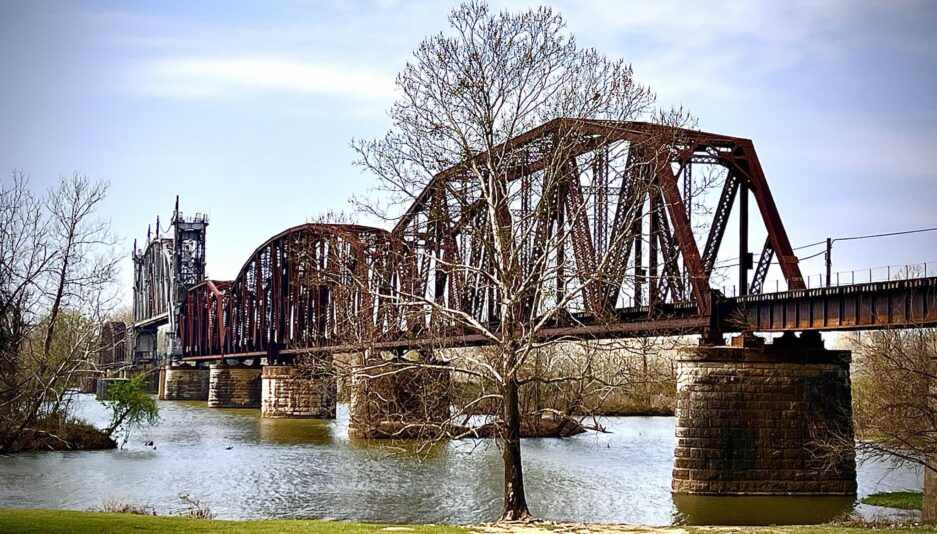
Just as now, when I gaze across the bridge to the next place, in my heart, I’ll someday be looking across the river to that place, my last and final destination and feel the need to go home.

I may even wonder, as I do now, why I have to wait—why I have to keep one foot in the present and have the other ready to take that step into eternity.

For right now, I’d settle for simply taking the next step.

Just one will do.

For a start.

Leaving home—to go home.


And then it happens all at once and unexpectedly. That is how things happen, I suppose. You pack your bags and find yourself walking yourself home.
(Shannon L Alder ~ American author)


Abraham was confidently looking forward to a city with eternal foundations, a city designed and built by God.
(Hebrews 11:10 ~ NLTHoly Bible, New Living Translation, copyright © 1996, 2004, 2015 by Tyndale House Foundation. All rights reserved.)


© Paul Phillips. He’s Taken Leave. 2017. All Rights Reserved.

Living in the Light

The ghosts in the old house have been disturbed and are keeping me awake.

No, not like the ghosts of movie fame—nor even poltergeists or apparitions in chains.  I mean those people who once were part of my life, but who only live here now in my memory.

Sometimes I wonder if I have awakened them, causing them, in turn, to interrupt my own sleep.  It’s only a thought, of course, not borne out by facts.

Still.  Here I am—awake.

I wrote of old light fixtures being made new to shine brightly the last time I shared my thoughts here.  Since then, something’s been niggling at the edges of my mind.  And, it’s not just the ghosts—although they have a good deal to do with it, truth be told.

I sat at a table in a restaurant with my children tonight, both adults, long since.  Showing them photos of the light fixtures we are putting back up in the house their grandparents lived in for most of their lives, I expected my offspring to exclaim about their memories of the fixtures.

They didn’t.  Not at all.

I couldn’t have told you that was on the ceiling in that house, Dad.

The other one nodded his head.

Never saw it.

How is that possible?  

Many hours of their childhood were spent in that house.  They played.  They worked.  They ate.  Surely, in all that time, those light fixtures were powered up and the light shone from them.  Surely.

I know it was so.  On any number of occasions, as we pulled into the drive to visit, the light blazed out from the windows, welcoming us in from the dark.

How could they not have noticed the fixtures?

As I consider the issue, a light begins to glimmer in my own brain.  In a moment, the notion is blazing as brightly as any of those ceiling lights ever did.

You see, on the first few occasions the light switch is turned on, if a fixture is particularly attractive, folks might notice and, perhaps, even be overwhelmed with the beauty.  But, after the process is repeated day after day, night after night—for weeks, months, years even—we forget about the light fixture on the ceiling and simply live in the light. 

We simply live in the light.

We don’t see the implement anymore.

We see only what is produced.  The thing necessary for life—light—fills the house.  Absolutely fills it.

And, that’s as should be.  

It is true in more than just our physical, everyday needs.  The light we require for our faith life is very much the same in the way it works.  

We are, indeed called to shine.  But, the purpose is that the watching world will see (and praise), not us, but the God who shines through us. (Matthew 5:16)

John—the one also called the Baptist, said it succinctly:  He must increase and I must decrease.  (John 3:30)

In the old house we’re taking the light fixtures which have kept the shadows at bay for the generation past, and are doing what is necessary to keep the shadows away for the generations in the future.

The same is true for the spirit life of our families and fellowships.  Saints of old, faithful in walking with the Savior, have lit the way for successive generations.  We can do no less than take up the same light and share it into the future.

Light from the past, shining into the future.

The light from the past is shining into the future. Share on X

We’ll leave the light on for you. 

It’s not an original thought, and others before us have actually made the promise and kept it.  To do the same will take a lifetime of faithfulness from us. 

A lifetime.

It’s time we were started.

Flip the light switch!  

Live in the light.


Lighthouses don’t fire cannons to call attention to their shining—they just shine.
(Dwight L Moody ~ American evangelist ~ 1837-1899)


And the city has no need of sun or moon, for the glory of God illuminates the city, and the Lamb is its light. The nations will walk in its light, and the kings of the world will enter the city in all their glory.
(Revelation 21:23-24 ~ NLTHoly Bible, New Living Translation, copyright © 1996, 2004, 2015 by Tyndale House Foundation. All rights reserved.)


© Paul Phillips. He’s Taken Leave. 2017. All Rights Reserved.

Never Much Hope

It was a hot Saturday afternoon in the Rio Grande Valley.  That, of course, could have described almost every one of the fifty-some Saturdays which occurred in any given year, but this one, I remember.

flag-football-1329752_640I remember it because it was the day the band geeks were going to show up the jocks in a game of two-below football.  I was one of the geeks.  Still am, truth be told.

You never saw such a group of unlikely athletes.  Oh, there were a few who had the physique for it, but the coordination hadn’t come along with the build.  On this day, we weren’t worried about that.

We were a team.  A group of guys focused on the same goal.  All for one and one for all.  We had heart.

The jocks showed up, jeering and making predictions.  Seventy to nothing, one big muscle-bound fellow taunted.  Others foresaw pain in our collective future.  

We weren’t afraid—much.

The game began.  For a little while, we held our own and it seemed that the predictions were very much flawed.  Then, little by little, our confidence faded.

Two-below football is a minimum contact form of the sport which allows blocking, but not much other hitting of body on body.  The person carrying the ball should expect nothing more than the slapping of two hands below the waist to bring the play to a halt.

Somehow, the jocks had the idea that it meant you simply tackled with two hands below the belt-line.  It turned out that one of the predictions had been right:  There was pain in our future.  A good bit of it.

I played for the entire first half.  A fair portion of the second half was spent on the ground along the sideline biting back the groans that a knee to the groin had elicited.  I was not alone on the sideline.  But still, I did get back out and play, however hampered I was by the discomfort, to end the game.

Heart or no heart, confidence or not, we lost—big time.  I don’t think the score was seventy to nothing, but it might as well have been.

There had never been a chance.  We were beaten before it began.

What’s that?

You thought the story would end better?  Perhaps a miracle finish?  Maybe a secret weapon to unleash upon the callous football players?

It didn’t happen.

It wasn’t a Hollywood story, you know.  It wasn’t even an epic fairy tale.

Happily ever after didn’t happen.

We lost.  Utterly and completely.

That’s life.  No, really.  It’s what life is.  Reality isn’t all parties and happiness.  Nobody wins every time.  Nobody.

Some of my friends will be unhappy with me as they read this.  Many voices have spoken different words into their lives.

I will respectfully and (hopefully) gently insist that our Creator has a different path for us.

For the last few years, the muttering has been growing.  Folks are unhappy with the thought that many good things are coming to an end.  We expected, as followers of Jesus, to live peacefully and unharmed in a bounty-filled land.

Wealth and plenty have been ours.  Our voices have been the only ones we heard, as we have grown fat and selfish.

Perhaps, I should speak for myself.  I have heard my own voice as I spoke words I believed to be true.  Speaking and not acting, I have grown fat.  In the absence of opposition, I have grown selfish beyond belief.

And now, in a way my grandparents and my parents never experienced, the world just outside my front door has grown increasingly unfriendly to my comfort and ease.

Don’t get me wrong.  I’m not claiming persecution.  I’ve seen—from afar—what happens to believers when they are persecuted.  I haven’t experienced even a fraction of that, nor have most folks I’m acquainted with.

But, it may come to that.  Being neither a prophet nor the son of a prophet, I cannot say.

Still, we are promised, not comfort, but discomfort.  We are promised, not open arms from the world around us, but reproach.  Folks we call our neighbors will turn on us.

I’m not talking about end-times prophecy.  I’m simply averring that this is what life will be for us if we truly follow Jesus.  

After all, He is the One who promised hardship.  Promised it.  (John 16:33)

He never asked us to win the battle for men’s hearts for Him.  That’s His job.  He simply asked us to stand firm to the end.

He never suggested that we would be happy and trouble-free because we serve Him faithfully, but He did promise that we will inherit His kingdom.  (Matthew 5:10)  

And, that brings us to the one other thing He did promise:  The day is coming.

The day is coming when all of this will fade into nothingness.  All the pain.  All the sadness.  All the jeering.  All the hardships we’ve ever faced.

All of it.  Nothing.  Nothing at all.

The Apostle Paul wrote down the words he was given by the Spirit:  

There is no comparison in any way between the passing inconveniences of this world and the unbelievable glory which will be ours in the next.  (Romans 8:18)

There are days when I am overcome with weariness—with sorrow—with despair.  This mountain I am facing can never be scaled, can never be conquered.

A friend reminded me tonight of that great fortress called Doubting Castle, kept by the Giant Despair.  John Bunyan wrote of it hundreds of years past.  

Many I know have been held captive there.  Many I know are still chained in its dungeon.

Still, it’s as true today as it was in the days when Mr. Bunyan sat in prison for his faith—still as true as in the early days of the Church:  The world has been overcome by the One we follow.  The outcome has never been in doubt.

Our day is coming.  

Hope’s spark still burns deep within each one who follows Him.

Our enemy doesn’t play by the rules.  He never has.  He seems so much more powerful than we are.  That hasn’t changed, either.

We seem so easily injured and tired out.

But, the game is not over yet.

And, he has been fooled before.

And, defeated.

As it turns out, he’s the one who never had any hope of winning.

I’m going to stick it out.

You?


And if our hope in Christ is only for this life, we are more to be pitied than anyone in the world.  
(1 Corinthians 15:19 ~ NLT)


“I wish it need not have happened in my time,” said Frodo.
“So do I,” said Gandalf, “and so do all who live to see such times, But that is not for them to decide.  All we have to decide is what to do with the time that is given us.”
(from The Two Towers ~ J.R.R. Tolkien ~ English novelist ~ 1892-1973)


© Paul Phillips. He’s Taken Leave. 2016. All Rights Reserved.